
Discover the complete guide to Search Engine Optimization with proven strategies, technical SEO best practices, content optimization, Google E-E-A-T principles, AI-powered search insights, and practical techniques to improve rankings, increase organic traffic, and grow your online business sustainably.
Introduction
Search Engine Optimization (SEO) has become one of the most valuable long-term digital marketing investments for businesses of every size. As search engines continue evolving with artificial intelligence, user behavior analysis, semantic understanding, and increasingly sophisticated ranking systems, successful SEO requires far more than simply inserting keywords into a webpage. Today’s optimization focuses on delivering exceptional user experiences, solving real problems, and building trustworthy websites that demonstrate expertise and authority.
At MyBlogPoster, we believe sustainable SEO success comes from creating genuinely valuable content supported by strong technical foundations, strategic optimization, and continuous improvement. Businesses that understand modern SEO principles are better positioned to attract qualified visitors, increase conversions, and establish long-term authority within their industries.
This comprehensive guide explores every major aspect of modern SEO, from understanding how search engines work to implementing advanced optimization strategies. Throughout this article, you’ll learn practical techniques aligned with Google’s latest recommendations, discover common mistakes to avoid, and gain actionable insights that can help improve your website’s visibility while maintaining compliance with Google’s quality standards.
Understanding Modern SEO and Why It Matters More Than Ever
Search Engine Optimization has transformed dramatically over the past decade. Earlier SEO strategies often relied on repetitive keywords, excessive backlink building, and technical loopholes that manipulated search rankings. Those approaches no longer provide sustainable results. Modern SEO emphasizes quality, relevance, trust, and user satisfaction above all else.
Today’s search engines evaluate websites using hundreds of ranking signals. They assess content quality, user engagement, page experience, loading performance, mobile usability, website security, topical authority, structured data, internal linking, and many other factors. Artificial intelligence now helps search engines understand search intent rather than simply matching exact keywords.
Businesses that embrace these changes gain significant competitive advantages. Organic traffic consistently delivers qualified visitors who actively search for products, services, or information. Unlike paid advertising, organic visibility continues generating value long after content is published, making SEO one of the highest-return marketing investments available.
Modern SEO also contributes to brand credibility. Users naturally trust websites appearing prominently in search results because high rankings often indicate authority, reliability, and expertise. High-quality optimization therefore supports both visibility and customer confidence.
Another important advantage is sustainability. Effective SEO builds long-term digital assets instead of temporary campaigns. Well-written evergreen content, technically optimized websites, and strong topical authority continue producing results for months or even years with regular updates.
Rather than attempting to “beat” search engines, successful organizations focus on helping search engines better understand their content while providing outstanding user experiences. This philosophy aligns closely with Google’s official guidance available through Google Search Central and forms the foundation of every effective SEO strategy.
How Search Engines Discover, Understand, and Rank Websites
Understanding how search engines operate helps businesses make better optimization decisions. Every search result begins with three primary processes: crawling, indexing, and ranking.
During crawling, automated programs known as search engine bots continuously explore websites by following links across the internet. They discover new pages, revisit existing content, and identify updates. Websites with clear navigation, logical internal linking, XML sitemaps, and fast performance generally allow crawlers to work more efficiently.
Once pages are discovered, search engines analyze their content before adding relevant information into enormous indexes. During indexing, they examine page structure, headings, images, metadata, structured data, internal links, page speed, mobile usability, semantic relationships, and numerous contextual signals that help determine what each page represents.
Ranking occurs when users perform searches. Search engines analyze the query, interpret user intent, and compare billions of indexed pages to identify the most helpful results. Modern algorithms evaluate relevance, authority, freshness, trustworthiness, usability, location, personalization, and content quality simultaneously.
User intent plays an especially important role. Someone searching “best running shoes” expects product comparisons, while another searching “how to repair running shoes” seeks educational guidance. Understanding these differences allows websites to produce content matching real user expectations.
Artificial intelligence further improves ranking accuracy by interpreting natural language instead of relying solely on exact keyword matches. Search engines recognize synonyms, related concepts, contextual meaning, and conversational phrasing, allowing genuinely comprehensive content to outperform pages created purely for keyword density.
Businesses should therefore optimize for people first and search engines second. When content thoroughly answers user questions while remaining technically accessible, search engines are much more likely to reward those pages with strong visibility.
Understanding Search Intent: The Foundation of Successful SEO
Every successful SEO campaign begins by understanding why users perform searches. Search intent represents the motivation behind every query, helping search engines determine which content best satisfies user expectations.
Search intent generally falls into four primary categories.
Informational intent involves users seeking knowledge or answers. Examples include searches like “What is SEO?” or “How does technical SEO work?” Educational articles, guides, tutorials, and explanatory resources perform exceptionally well for these queries because they prioritize learning rather than immediate purchases.
Navigational intent occurs when users already know the website or brand they wish to visit. Queries like “Google Search Console” or “YouTube Studio” indicate users are searching for a specific destination instead of comparing alternatives.
Commercial investigation reflects users researching products or services before making purchasing decisions. Searches such as “best SEO software” or “SEO agency comparison” require balanced, comprehensive information that helps users evaluate options objectively.
Transactional intent signals strong purchase readiness. Queries including “buy SEO audit service” or “hire SEO consultant” indicate users want to complete specific actions. Landing pages optimized for clear calls-to-action typically perform well for these searches.
Matching content to user intent significantly improves engagement metrics, reduces bounce rates, increases conversions, and strengthens ranking potential. Content misaligned with user expectations often struggles regardless of keyword optimization.
Rather than targeting isolated keywords, businesses should develop complete topic clusters addressing multiple stages of the customer journey. Educational content builds awareness, comparison articles support consideration, and service pages encourage conversions. This integrated approach creates stronger topical authority while serving users more effectively.
Understanding intent also encourages better content planning, enabling websites to answer broader questions users naturally ask throughout their research process.
Keyword Research That Supports Long-Term Organic Growth
Keyword research remains essential, but its purpose has evolved considerably. Instead of identifying isolated phrases to repeat excessively, modern keyword research uncovers the language, questions, challenges, and interests of real audiences.
Effective research begins by identifying a primary topic before expanding into related subtopics, semantic variations, and user-generated questions. Long-tail keywords frequently deliver higher conversion rates because they reflect specific user needs with lower competition.
For example, rather than targeting only “SEO,” businesses may also optimize for phrases like “technical SEO checklist,” “improve Core Web Vitals,” “local SEO strategy,” “website optimization guide,” and “enterprise SEO best practices.” Collectively, these related topics strengthen topical authority while attracting highly relevant traffic.
Keyword research should also consider search intent, seasonality, industry trends, and competitive opportunities. Businesses benefit from understanding not only what users search for but also why they search and which problems they hope to solve.
Semantic SEO has become increasingly important because search engines understand relationships between concepts. Including naturally related terminology enhances contextual relevance without unnecessary repetition. This creates richer, more comprehensive content that better satisfies users.
Regular keyword reviews are equally valuable because search behavior evolves continuously. Emerging technologies, AI-driven search experiences, new products, and changing consumer interests create opportunities for fresh content that competitors may overlook.
Successful keyword strategies therefore prioritize user needs over search volume alone. A smaller audience with strong purchasing intent often produces greater business value than high-volume informational traffic lacking conversion potential.
Building High-Quality Content That Demonstrates Experience and Expertise
Exceptional content remains the strongest competitive advantage in SEO. Search engines increasingly reward pages demonstrating genuine expertise, original insight, practical experience, and trustworthy information rather than generic summaries.
Every article should solve real problems comprehensively. Instead of producing superficial overviews, businesses should create detailed resources answering common questions, explaining complex topics clearly, and providing actionable recommendations supported by evidence whenever appropriate.
Experience adds significant value because readers appreciate practical knowledge gained through real implementation. Sharing lessons learned, case-based observations, workflows, examples, and realistic expectations builds credibility while distinguishing content from automated or duplicated material.
Content should also remain current. Regular updates ensure statistics, recommendations, screenshots, technologies, and best practices accurately reflect today’s environment. Freshness signals ongoing commitment to quality while improving long-term relevance.
Readability matters equally. Short paragraphs, descriptive headings, logical organization, visual hierarchy, bullet lists where appropriate, and conversational language improve user engagement without sacrificing professionalism. Clear writing helps both readers and search engines understand page topics more effectively.
Originality remains essential. Simply rewriting existing articles rarely produces lasting rankings because search engines prioritize pages contributing unique perspectives. Businesses should combine expert knowledge, research, firsthand experience, and thoughtful analysis to produce genuinely valuable resources.
Finally, content should encourage continued exploration through strategic internal linking, guiding readers toward related topics while strengthening overall website architecture.
Google E-E-A-T: Building Trust That Supports Higher Rankings
One of the most influential concepts shaping modern SEO is Google’s Experience, Expertise, Authoritativeness, and Trustworthiness (E-E-A-T) framework. Although E-E-A-T itself is not a direct ranking factor, it strongly influences how search quality is evaluated and reflects many signals that search systems aim to reward.
Experience refers to first-hand involvement with a topic. Content becomes more valuable when it reflects practical knowledge, real-world testing, implementation examples, or professional observations rather than purely theoretical explanations.
Expertise focuses on subject knowledge. Readers expect accurate, comprehensive information written by individuals or organizations with genuine understanding of their field. Demonstrating expertise involves explaining concepts clearly, using correct terminology naturally, and providing balanced guidance that prioritizes user benefit.
Authoritativeness develops over time through consistent publication of valuable resources, recognition from reputable sources, quality backlinks, positive brand reputation, and strong topical coverage. Becoming an authority requires ongoing commitment rather than isolated optimization efforts.
Trustworthiness serves as the foundation of E-E-A-T. Websites should provide accurate information, transparent contact details, secure browsing experiences, clear privacy policies, and honest content that avoids misleading claims. Trust also depends on maintaining updated information and correcting inaccuracies when necessary.
Businesses seeking long-term SEO success should integrate E-E-A-T principles into every aspect of website development, content creation, customer communication, and technical optimization. This holistic approach aligns closely with Google’s broader objective of delivering the most reliable and helpful search results.
Creating an Effective Website Architecture for Better SEO Performance
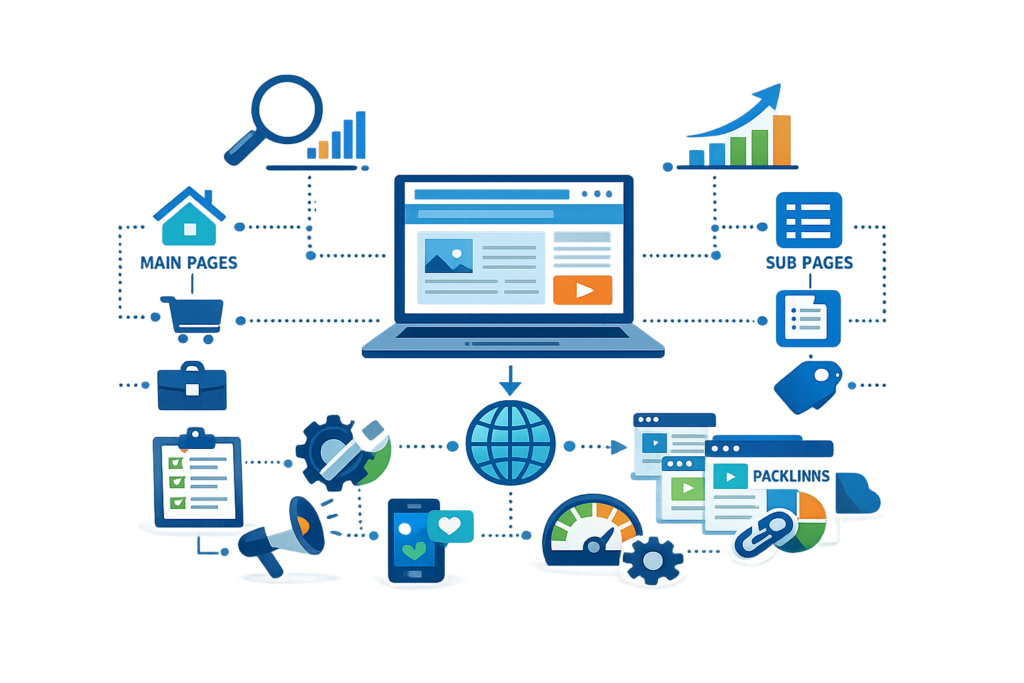
Website architecture influences both user experience and search engine understanding. A logical, organized structure helps visitors find information efficiently while enabling search engines to crawl and index content more effectively.
An effective architecture begins with clear navigation. Primary categories should reflect major topics, while subcategories organize related content logically. This hierarchy allows users to move naturally from broad subjects to increasingly specific information without confusion.
Internal linking strengthens this structure by connecting related pages using descriptive anchor text. These links distribute authority throughout the website, help search engines discover additional pages, and encourage visitors to continue exploring valuable resources. Well-planned internal linking also reinforces topical relationships, making it easier for search engines to understand subject expertise.
URL structure should remain clean, readable, and descriptive. Simple URLs containing relevant words improve usability while providing additional contextual information for search engines. Consistency across the entire website further supports organization and maintainability.
Breadcrumb navigation offers another valuable enhancement by showing users their current location within the site’s hierarchy. This improves navigation while generating structured information that search engines can interpret for enhanced search results.
Finally, regular content audits help maintain architectural quality by identifying outdated pages, duplicate content, broken links, orphan pages, and opportunities for consolidation. Continuous improvement ensures the website remains organized, user-friendly, and optimized for sustainable organic growth.
Technical SEO Foundations for Sustainable Search Visibility
Technical SEO forms the backbone of every successful SEO strategy. Even the most valuable content may struggle to rank if search engines cannot efficiently crawl, index, and understand a website. A technically optimized site ensures that search engines can access pages quickly, interpret their relevance accurately, and deliver them confidently to users searching for related information.
One of the first priorities in technical SEO is crawlability. Websites should have a clean XML sitemap submitted through Google Search Console and a properly configured robots.txt file. These elements guide search engine crawlers toward important pages while preventing unnecessary or duplicate content from consuming crawl budget. Broken links, redirect chains, orphan pages, and crawl errors should be monitored regularly to maintain healthy site accessibility.
Indexing is equally important. Search engines must determine which pages deserve inclusion in search results. Duplicate content, thin pages, accidental noindex tags, and canonicalization issues can confuse search engines and dilute ranking signals. Using canonical tags correctly helps consolidate authority and prevents multiple versions of similar pages from competing against each other.
Website security also contributes to technical SEO. HTTPS encryption protects user data and is considered a trust signal by Google. Sites should maintain valid SSL certificates, avoid mixed-content warnings, and provide secure browsing experiences across all pages. Security improvements not only support rankings but also build visitor confidence.
Finally, structured data enhances technical optimization by helping search engines understand page context. Implementing structured data for articles, FAQs, products, reviews, and business information can improve search result appearance through rich snippets, increasing visibility and click-through rates.
On-Page SEO Best Practices That Improve Relevance and Rankings
On-page SEO focuses on optimizing individual pages so they clearly communicate their topic, relevance, and value to both users and search engines. Effective on-page optimization goes beyond keyword placement; it involves creating well-structured, readable, and user-focused content that satisfies search intent comprehensively.
Title tags remain one of the most influential on-page elements. A strong title should include the primary keyword naturally, remain compelling to users, and accurately represent the page content. Meta descriptions, while not direct ranking factors, influence click-through rates by summarizing the page’s value proposition clearly and persuasively.
Headings provide essential structure for readers and search engines. Each page should use a logical hierarchy with one H1 heading, followed by descriptive H2 and H3 subheadings. This organization improves readability, helps users scan content quickly, and allows search engines to understand the main topics covered on the page.
Content optimization should prioritize depth, clarity, and usefulness. Keywords should appear naturally in headings, introductory paragraphs, body text, image alt text, and conclusions where relevant. However, keyword stuffing should be avoided. Modern search engines understand semantic relationships, so related terms and natural language variations often strengthen topical relevance more effectively than repetitive exact matches.
Images and multimedia also contribute to on-page SEO. Optimized images with descriptive filenames, compressed file sizes, and accurate alt text improve accessibility, page speed, and contextual understanding. Internal links to related resources further enhance user navigation and distribute authority throughout the website.
Ultimately, strong on-page SEO creates pages that are easy to understand, enjoyable to read, and clearly aligned with user intent. This combination improves engagement metrics, strengthens topical authority, and increases the likelihood of achieving sustainable rankings.
Core Web Vitals and Page Experience Optimization
Google’s Page Experience signals emphasize that rankings are influenced not only by content relevance but also by how users experience a webpage. Core Web Vitals measure key aspects of loading speed, interactivity, and visual stability, making them essential components of modern SEO.
The first metric, Largest Contentful Paint (LCP), measures loading performance. A good LCP score is generally under 2.5 seconds, meaning the main content becomes visible quickly. Improving LCP often involves optimizing server response times, compressing images, using efficient hosting, enabling caching, and minimizing render-blocking resources.
Interaction to Next Paint (INP) evaluates responsiveness by measuring how quickly a page reacts to user interactions. Slow scripts, excessive JavaScript, and heavy third-party resources can negatively affect responsiveness. Reducing unnecessary scripts, optimizing code, and improving browser efficiency help create smoother user experiences.
Cumulative Layout Shift (CLS) measures visual stability. Pages with shifting elements frustrate users, especially when buttons or content move unexpectedly during loading. Setting image dimensions, reserving space for ads and embeds, and avoiding dynamic content insertion above existing elements can improve CLS scores significantly.
Mobile usability is another critical page experience factor. Since Google primarily uses mobile-first indexing, websites must provide seamless experiences across smartphones and tablets. Responsive design, readable text, accessible navigation, and touch-friendly buttons all contribute to stronger mobile performance.
Businesses can monitor Core Web Vitals through PageSpeed Insights and Google Search Console . Regular performance audits help identify bottlenecks and ensure that technical improvements translate into better user satisfaction, engagement, and ranking potential.
Building Authority Through Ethical Link Building and Digital PR
Backlinks remain one of the strongest signals of authority in SEO, but the quality and relevance of links matter far more than quantity. Ethical link building focuses on earning genuine recommendations from reputable websites rather than manipulating rankings through spammy tactics or purchased links.
The most sustainable link-building strategy is creating link-worthy content. Comprehensive guides, original research, case studies, industry reports, infographics, and valuable resources naturally attract references from other websites. When content provides unique insights or solves real problems, it becomes more likely to earn editorial backlinks.
Digital PR expands this approach by building relationships with journalists, bloggers, industry publications, and influencers. Sharing expert commentary, contributing guest articles, participating in interviews, and offering valuable data can generate high-authority mentions and backlinks while also increasing brand visibility.
Relevance is crucial when evaluating backlink opportunities. Links from websites within the same industry or closely related topics carry more contextual value than unrelated links. A smaller number of high-quality, relevant backlinks often provides greater SEO benefit than a large volume of low-quality links.
Anchor text should remain natural and varied. Over-optimized exact-match anchor text can appear manipulative, while branded, descriptive, and contextual anchors create a healthier backlink profile. Diversity in link sources, anchor text, and linking page types also contributes to long-term stability.
Importantly, businesses should avoid black-hat practices such as link farms, private blog networks, automated link schemes, and paid links that violate Google’s guidelines. Ethical link building may take more time, but it produces stronger authority, lower risk, and more sustainable SEO results.
Local SEO Strategies for Reaching Customers in Your Target Market
Local SEO has become increasingly important for businesses that serve customers within specific geographic areas. Whether you operate a physical store, provide local services, or target regional markets, optimizing for local search helps connect your business with people actively searching for nearby solutions. Modern consumers frequently use search engines to find restaurants, healthcare providers, retail stores, home services, and professional businesses, making local visibility an essential component of digital marketing.
A successful Local SEO strategy begins with maintaining accurate business information across every online platform. Your business name, address, phone number, website, and operating hours should remain consistent everywhere they appear. Inconsistent information can confuse both users and search engines, reducing trust and negatively affecting local rankings. Businesses should also create detailed location pages when serving multiple areas, providing unique and valuable information rather than duplicate content for each location.
Customer reviews play a significant role in local search visibility. Positive reviews demonstrate credibility while providing fresh, user-generated content that search engines value. Encouraging satisfied customers to leave honest feedback helps strengthen online reputation and improves click-through rates from local search results. Equally important is responding professionally to both positive and negative reviews, demonstrating excellent customer service and transparency.
Localized content also strengthens regional authority. Publishing articles about community events, local industry trends, regional guides, and location-specific services helps search engines understand the geographical relevance of your website. Businesses can further enhance local visibility by earning mentions and backlinks from regional organizations, local publications, business associations, and community websites.
Mobile optimization is particularly important for local searches because many users search while traveling or looking for immediate solutions. Fast-loading pages, clear contact information, interactive maps, click-to-call functionality, and easy navigation improve user experience while supporting stronger local SEO performance. Businesses that combine technical excellence with locally relevant content often achieve greater visibility within their target communities.
Measuring SEO Performance Using Data and Analytics
Successful SEO requires continuous measurement rather than assumptions. Monitoring performance allows businesses to identify opportunities, measure progress, understand user behavior, and refine strategies based on real evidence instead of guesswork. Without meaningful analytics, it becomes difficult to determine which optimization efforts generate measurable business results.
Organic traffic remains one of the most important performance indicators. Tracking growth in organic visitors helps evaluate whether optimization efforts are improving visibility. However, traffic alone does not provide the complete picture. Businesses should also analyze keyword rankings, impressions, click-through rates, average position, and the quality of visitors arriving through search engines.
User engagement metrics reveal how effectively content satisfies visitor expectations. Average engagement time, pages per session, bounce rate, scroll depth, and returning visitor percentages provide valuable insights into content quality and user experience. High engagement often indicates that visitors find the information relevant and useful, supporting long-term SEO success.
Conversions represent the ultimate measure of SEO effectiveness. Depending on business goals, conversions may include purchases, contact form submissions, newsletter subscriptions, phone calls, appointment bookings, or downloads. Measuring organic conversion rates helps determine whether increased visibility is generating meaningful business outcomes rather than simply attracting more visitors.
Technical monitoring should also remain part of regular SEO reporting. Crawl errors, indexing issues, page speed, Core Web Vitals, mobile usability, broken links, structured data errors, and security warnings should be reviewed consistently. Addressing technical problems quickly prevents ranking losses and ensures search engines continue accessing website content efficiently.
Competitive analysis provides additional context by identifying strengths, weaknesses, and emerging opportunities. Comparing keyword performance, backlink growth, content coverage, and topical authority helps businesses understand where improvements can deliver the greatest competitive advantage. SEO is an ongoing process, and organizations that consistently analyze performance are better positioned to adapt to changing search behavior and algorithm updates.
Future Trends Shaping the Evolution of SEO

SEO continues evolving alongside advances in artificial intelligence, user behavior, and search technology. Businesses that anticipate these changes can develop strategies that remain effective even as search engines introduce new ranking systems and user experiences. Future success depends on adaptability, continuous learning, and maintaining a strong focus on delivering genuine value.
Artificial intelligence is reshaping how search engines understand language, context, and user intent. Modern algorithms evaluate meaning rather than isolated keywords, rewarding comprehensive content that answers questions naturally. Businesses should therefore focus on topical expertise, semantic relationships, and complete content ecosystems instead of optimizing for individual phrases alone.
Voice search and conversational queries continue growing as users increasingly interact with smartphones, smart speakers, and AI assistants. This trend encourages websites to optimize for natural language questions, long-tail keywords, and concise answers while maintaining detailed supporting content. Frequently asked questions and conversational headings help address these evolving search patterns effectively.
Visual search is becoming another important component of SEO. Optimized images, descriptive filenames, structured data, high-quality photography, and accessible alternative text improve discoverability across image search platforms. Video content is also gaining prominence, providing additional opportunities to reach audiences through multimedia search experiences while supporting overall topical authority.
User experience will remain central to future SEO success. Fast-loading websites, intuitive navigation, accessibility improvements, mobile optimization, and trustworthy design contribute not only to rankings but also to customer satisfaction and conversion performance. Search engines increasingly reward websites that prioritize people over algorithms.
Finally, organizations that invest in expertise, originality, transparency, and ongoing optimization will remain competitive regardless of future algorithm changes. Rather than chasing short-term ranking tactics, businesses should build authoritative resources that consistently help users solve real problems. Sustainable SEO has always been about creating lasting value, and this principle will continue guiding successful optimization strategies for years to come.
Common SEO Mistakes That Prevent Better Rankings
Even well-designed websites can struggle to achieve strong search visibility when common SEO mistakes go unnoticed. Identifying and correcting these issues is often one of the fastest ways to improve rankings, user experience, and long-term organic growth.
One of the most frequent mistakes is creating content primarily for search engines instead of people. Keyword stuffing, repetitive phrasing, and artificially optimized text make content difficult to read and provide little value to visitors. Modern search engines prioritize helpful, informative, and engaging content that genuinely answers user questions.
Another major issue is neglecting technical SEO. Broken links, crawl errors, slow-loading pages, duplicate content, incorrect redirects, missing XML sitemaps, and poor mobile usability all reduce a website’s ability to perform well in search results. Regular technical audits help identify these problems before they affect rankings.
Many businesses also overlook search intent. Ranking for a keyword is only valuable if the page satisfies the user’s expectations. Publishing informational content for transactional searches—or vice versa—often leads to poor engagement and lower rankings.
Weak internal linking is another common problem. Without logical internal links, search engines may struggle to understand relationships between pages, while users miss opportunities to explore additional valuable content.
Publishing low-quality or outdated content can also reduce authority. Articles should be reviewed regularly to ensure they remain accurate, relevant, and aligned with current industry developments. Updating existing high-performing content is often more effective than continually creating new pages.
Finally, many website owners expect immediate results. SEO is a long-term strategy requiring consistent optimization, high-quality content, technical improvements, and ongoing performance analysis. Sustainable growth comes from continuous improvement rather than short-term tactics.
Best Practices Summary
For long-term SEO success, businesses should focus on the following best practices:
- Create original, helpful, and user-focused content.
- Understand and satisfy search intent.
- Build topical authority through comprehensive content.
- Optimize website speed and Core Web Vitals.
- Maintain a mobile-friendly, secure website.
- Use clear website architecture and internal linking.
- Perform regular technical SEO audits.
- Earn high-quality backlinks naturally through valuable content.
- Demonstrate Experience, Expertise, Authoritativeness, and Trustworthiness (E-E-A-T).
- Monitor performance using analytics and continuously improve based on data.
- Keep content updated as search trends and user expectations evolve.
- Prioritize long-term quality over short-term ranking tactics.
Businesses that consistently apply these principles are more likely to achieve sustainable organic growth, stronger search visibility, and improved user satisfaction.
Frequently Asked Questions
1. What is SEO, and why is it important?
SEO (Search Engine Optimization) is the process of improving a website’s visibility in search engine results. It helps attract qualified organic traffic, increases brand credibility, and supports long-term business growth without relying solely on paid advertising.
2. How long does SEO take to show results?
SEO is a long-term investment. While some technical improvements may produce noticeable changes within a few weeks, meaningful ranking improvements typically take several months depending on competition, website authority, and content quality.
3. What is the difference between On-Page SEO and Technical SEO?
On-Page SEO focuses on optimizing content, headings, keywords, metadata, and internal links, while Technical SEO improves website infrastructure, crawlability, indexing, security, structured data, and overall performance.
4. Are backlinks still important?
Yes. High-quality, relevant backlinks continue to be one of the strongest indicators of authority. However, quality matters far more than quantity, and links should be earned naturally through valuable content and genuine relationships.
5. How often should I update my website content?
There is no fixed schedule, but important pages should be reviewed regularly. Updating outdated information, improving content depth, adding new insights, and refreshing statistics can help maintain relevance and improve rankings.
6. Does website speed affect SEO?
Yes. Fast-loading websites improve user experience and contribute to better Core Web Vitals, which support stronger search performance while also reducing bounce rates and improving engagement.
7. What is Google E-E-A-T?
E-E-A-T stands for Experience, Expertise, Authoritativeness, and Trustworthiness. These principles help Google evaluate content quality and encourage publishers to create accurate, reliable, and genuinely helpful information.
8. Is SEO better than paid advertising?
SEO and paid advertising serve different purposes. Paid campaigns generate immediate visibility, while SEO builds long-term organic traffic and sustainable online authority. Many successful businesses combine both strategies for maximum effectiveness.
Conclusion
SEO is no longer about simply ranking for keywords—it is about delivering exceptional value, building trust, and creating outstanding digital experiences. As search technology continues to evolve through artificial intelligence, semantic understanding, and user-focused ranking systems, businesses that prioritize quality over shortcuts will achieve the greatest long-term success.
At MyBlogPoster, we believe successful SEO combines strategic planning, technical excellence, authoritative content, ethical optimization, and continuous improvement. By implementing the strategies outlined throughout this guide, businesses can strengthen their online presence, attract highly qualified visitors, and build lasting authority within their industries.
Remember that SEO is an ongoing journey rather than a one-time project. Regular analysis, continuous learning, and adapting to changing search trends will ensure your website remains competitive and continues generating sustainable organic growth for years to come.
Want to Implement This Easily?
Prompt
You are an expert consultant. Based on the blog post titled “SEO”, provide a step-by-step, practical implementation guide. Include tools, best practices, common mistakes to avoid, and advanced tips. Assume the reader wants to implement everything discussed in this article effectively.
Call to Action
Want our help implementing this? Just reach out to us via our website contact form: