
Facebook Ads Strategy 2026: Learn how to create, optimize, and scale high-converting Facebook ad campaigns using advanced targeting, creatives, and data-driven strategies for maximum ROI.
Introduction
In today’s hyper-competitive digital landscape, Facebook Ads remain one of the most powerful tools for businesses looking to generate leads, increase sales, and build brand awareness at scale. With billions of active users and highly sophisticated targeting capabilities, Facebook offers marketers an unmatched opportunity to reach the right audience at the right time.
At MyBlogPoster, we understand that running successful ad campaigns is no longer about boosting posts or setting a basic budget. It requires a deep understanding of audience psychology, creative strategy, data analysis, and continuous optimization. Businesses that leverage these elements effectively can significantly outperform competitors and achieve sustainable growth.
This comprehensive guide is designed to help you master Facebook Ads in 2026. Whether you’re a beginner or an experienced marketer, you’ll learn actionable strategies, proven frameworks, and expert-level insights to build campaigns that convert and scale profitably.
Understanding Facebook Ads Ecosystem
The Facebook Ads ecosystem is a sophisticated network that goes far beyond just running ads on Facebook. It includes platforms like Instagram, Messenger, and the Audience Network, all managed through Meta Ads Manager. Understanding this ecosystem is essential for building campaigns that deliver consistent and measurable results.
At its core, Facebook Ads operate on an auction-based system. Advertisers compete for ad placements based on factors like bid amount, ad quality, and relevance score. This means that even with a smaller budget, high-quality ads can outperform competitors with larger budgets. The algorithm prioritizes user experience, ensuring that engaging and relevant ads get better visibility.
Another key component of the ecosystem is data. Facebook collects vast amounts of user data, allowing advertisers to target audiences based on demographics, interests, behaviors, and even past interactions. This data-driven approach enables precise targeting, making it possible to reach users who are most likely to convert. Understanding how to leverage this data is critical for maximizing campaign performance.
Setting Clear Advertising Goals
Before launching any campaign, defining clear and measurable goals is crucial. Facebook Ads offer multiple campaign objectives, including awareness, consideration, and conversion. Choosing the right objective directly impacts how your ads are optimized and delivered.
For example, if your goal is brand awareness, Facebook will prioritize showing your ads to users who are more likely to remember them. On the other hand, if your objective is conversions, the algorithm focuses on users who are more likely to take specific actions, such as making a purchase or signing up for a service. Aligning your campaign objective with your business goal ensures better results.
Setting SMART goals—Specific, Measurable, Achievable, Relevant, and Time-bound—can significantly improve campaign performance. Instead of vague goals like “increase sales,” define clear targets such as “generate 100 conversions within 30 days at a cost per acquisition below $10.” This level of clarity helps in tracking performance and making data-driven decisions.
Audience Targeting Strategies That Convert
Audience targeting is one of the most powerful features of Facebook Ads. The platform allows advertisers to create highly specific audience segments, ensuring that ads are shown to users who are most likely to engage and convert.
Core audiences are built using demographic, geographic, and interest-based targeting. This is ideal for reaching new users who may not yet be familiar with your brand. However, for higher conversion rates, custom audiences and lookalike audiences are more effective. Custom audiences allow you to target users who have already interacted with your business, while lookalike audiences help you reach new users similar to your existing customers.
Advanced targeting strategies involve layering multiple audience filters and continuously refining them based on performance data. For example, combining interests with behavioral data can create highly targeted segments that deliver better results. Regularly analyzing audience insights and adjusting targeting parameters is essential for maintaining campaign effectiveness.
Crafting High-Converting Ad Creatives
Ad creatives play a crucial role in determining the success of your campaigns. A well-designed ad can capture attention, communicate value, and drive action within seconds. In a crowded digital space, creativity is often the differentiating factor between successful and failed campaigns.
Effective ad creatives include compelling visuals, clear messaging, and strong calls to action. Whether it’s an image, video, or carousel ad, the content should resonate with your target audience and address their pain points. Using storytelling techniques can make your ads more engaging and memorable.
Testing different creative variations is also essential. A/B testing allows you to identify which elements—such as headlines, images, or calls to action—perform best. Continuously optimizing your creatives based on data ensures that your campaigns remain effective over time.
Writing Persuasive Ad Copy
Ad copy is the backbone of any successful Facebook ad. It’s what communicates your message, highlights your value proposition, and persuades users to take action. Writing compelling ad copy requires a deep understanding of your audience and their needs.
The most effective ad copy follows a structured approach: attention, interest, desire, and action (AIDA). Start with a strong hook to capture attention, followed by engaging content that builds interest and desire. Finally, include a clear call to action that tells users exactly what to do next.
Personalization and emotional appeal can significantly enhance the effectiveness of your ad copy. Addressing specific pain points and offering solutions makes your ads more relatable and impactful. Additionally, keeping the copy concise and easy to read ensures better engagement, especially on mobile devices.
Budgeting and Bidding Strategies
Budgeting and bidding are critical components of Facebook Ads management. Understanding how to allocate your budget and optimize your bids can significantly impact your campaign’s return on investment.
Facebook offers two main budgeting options: daily budget and lifetime budget. A daily budget ensures consistent spending, while a lifetime budget allows Facebook to distribute your budget over a set period. Choosing the right option depends on your campaign goals and timeline.
Bidding strategies also play a crucial role in campaign performance. Automatic bidding allows Facebook to optimize bids for the best results, while manual bidding gives you more control over costs. Testing different bidding strategies and analyzing performance data can help you find the most effective approach for your campaigns.
Landing Page Optimization for Facebook Ads
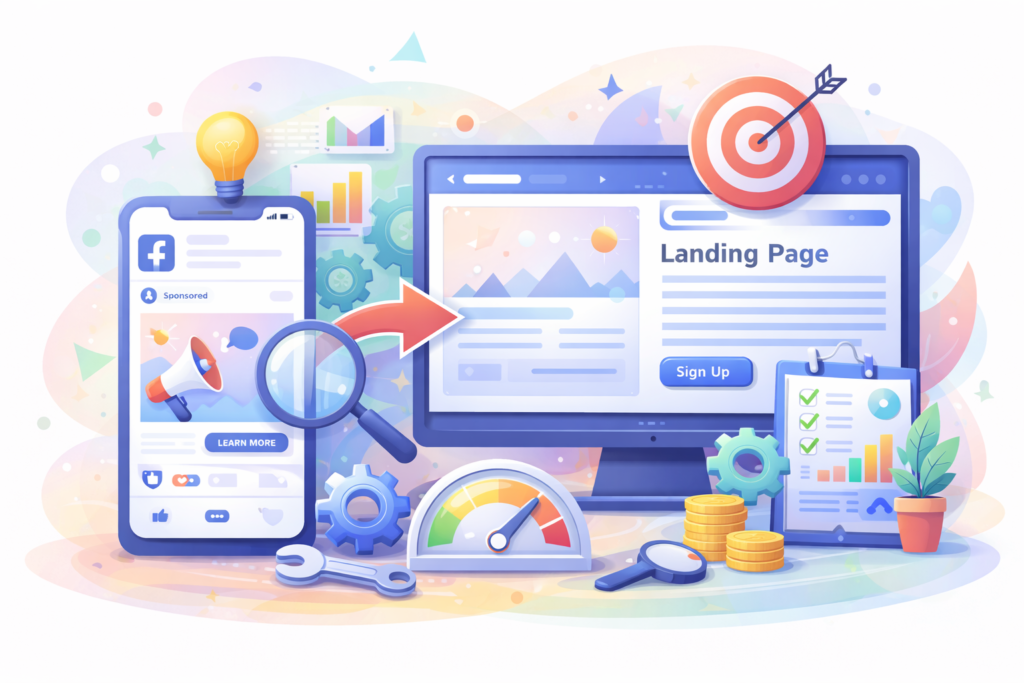
Driving traffic to your website is only half the battle. The real challenge lies in converting that traffic into leads or customers. This is where landing page optimization becomes essential.
A high-converting landing page should have a clear and compelling headline, relevant content, and a strong call to action. It should also align with the messaging in your ad to ensure a seamless user experience. Consistency between the ad and landing page increases trust and improves conversion rates.
Page speed and mobile optimization are also critical factors. Slow-loading pages can lead to high bounce rates and lost opportunities. According to Google PageSpeed Insights, optimizing page performance can significantly improve user experience and conversion rates. Ensuring that your landing pages load quickly and function smoothly on all devices is essential for maximizing results.
Tracking and Analytics for Data-Driven Decisions
Tracking and analytics are the foundation of successful Facebook Ads campaigns. Without accurate data, it’s impossible to measure performance or make informed decisions.
Facebook Pixel is a powerful tool that allows you to track user interactions on your website. It provides valuable insights into user behavior, enabling you to optimize your campaigns for better results. Setting up the Pixel correctly is essential for tracking conversions and building custom audiences.
In addition to Facebook’s built-in analytics, integrating tools like Google Analytics can provide deeper insights into user behavior. These tools help you understand how users interact with your website, identify areas for improvement, and refine your marketing strategies.
Regularly analyzing key metrics such as click-through rate, conversion rate, and cost per acquisition is crucial. These insights allow you to identify what’s working, what’s not, and where to make improvements for better performance.
Scaling Facebook Ads for Maximum ROI
Scaling Facebook Ads is the process of increasing your ad spend while maintaining or improving performance. It requires a strategic approach to ensure that higher budgets translate into higher returns rather than wasted spend. Many advertisers make the mistake of scaling too quickly, which often leads to performance drops due to audience saturation or algorithm instability.
There are two primary scaling methods: vertical scaling and horizontal scaling. Vertical scaling involves increasing the budget of a high-performing campaign, while horizontal scaling involves duplicating successful ad sets and targeting new audience segments. Both methods have their advantages, and the best approach often involves a combination of both strategies.
To scale effectively, it’s important to monitor key performance indicators and make incremental changes. Increasing budgets gradually allows the algorithm to adjust and maintain performance stability. Additionally, testing new creatives and audience segments ensures that your campaigns continue to deliver results as they grow.
Retargeting and Funnel Optimization
Retargeting is one of the most powerful strategies in Facebook Ads. It allows you to reconnect with users who have already interacted with your brand, increasing the likelihood of conversions. By targeting warm audiences, you can significantly improve your return on ad spend.
A well-structured sales funnel is essential for effective retargeting. The funnel typically includes awareness, consideration, and conversion stages. Each stage requires different messaging and creatives tailored to the user’s level of engagement. For example, users in the awareness stage may respond better to educational content, while those in the conversion stage need strong offers and clear calls to action.
Dynamic ads and personalized messaging can further enhance retargeting efforts. By showing users products or services they have previously viewed, you create a more relevant and engaging experience. Continuous optimization of your funnel ensures that users move smoothly from one stage to the next, maximizing conversions.
Leveraging AI and Automation in Facebook Ads
Artificial intelligence and automation are transforming the way Facebook Ads are managed. From automated bidding to dynamic creative optimization, these technologies enable advertisers to achieve better results with less manual effort.
Facebook’s machine learning algorithms analyze vast amounts of data to optimize ad delivery. This includes identifying the best audience segments, determining optimal ad placements, and adjusting bids in real-time. Leveraging these capabilities allows advertisers to focus on strategy and creativity rather than manual adjustments.
Automation tools also help streamline campaign management. Features like automated rules and campaign budget optimization ensure that your ads perform efficiently without constant monitoring. By embracing AI and automation, businesses can scale their campaigns more effectively and stay ahead of the competition.
Compliance with Advertising Policies and Guidelines
Running successful Facebook Ads requires strict adherence to platform policies and industry standards. Non-compliance can lead to ad disapproval, account restrictions, or even permanent bans, which can significantly impact your business.
Understanding Facebook’s advertising policies is essential for avoiding these issues. These policies cover various aspects, including prohibited content, data usage, and user privacy. Staying updated with policy changes ensures that your campaigns remain compliant and effective.
In addition to Facebook’s policies, following broader digital marketing guidelines is equally important. Resources like Google Search Essentials provide valuable insights into creating high-quality, user-focused content. Adhering to these guidelines not only improves compliance but also enhances the overall effectiveness of your marketing efforts.
Advanced A/B Testing and Experimentation
A/B testing is a critical component of optimizing Facebook Ads. It involves comparing different versions of your ads to determine which performs better. This data-driven approach helps you make informed decisions and continuously improve your campaigns.
Testing can be applied to various elements, including headlines, images, ad copy, and targeting options. By isolating one variable at a time, you can accurately identify what drives better performance. This systematic approach ensures that your optimizations are based on reliable data rather than assumptions.
Consistency in testing is key to long-term success. Regular experimentation allows you to adapt to changing audience preferences and market trends. Over time, these incremental improvements can lead to significant gains in performance and return on investment.
Measuring Success and Optimizing Performance
Measuring the success of your Facebook Ads campaigns requires a comprehensive understanding of key metrics and performance indicators. These metrics provide insights into how your campaigns are performing and where improvements can be made.
Important metrics include click-through rate, conversion rate, cost per click, and return on ad spend. Each metric provides a different perspective on campaign performance, helping you identify strengths and weaknesses. Regular monitoring of these metrics ensures that you stay on track and achieve your advertising goals.
Optimization is an ongoing process that involves analyzing data, testing new strategies, and making adjustments. By continuously refining your campaigns, you can improve performance and maximize your return on investment. This iterative approach is essential for staying competitive in the ever-evolving digital landscape.
Future Trends in Facebook Advertising
The future of Facebook Ads is shaped by technological advancements, changing user behaviors, and evolving privacy regulations. Staying ahead of these trends is essential for maintaining a competitive edge.
One of the most significant trends is the increasing importance of privacy and data protection. With stricter regulations and changes in tracking capabilities, advertisers need to focus on first-party data and consent-based marketing strategies. Building strong relationships with your audience becomes more important than ever.
Another key trend is the rise of video content and immersive experiences. Short-form videos, interactive ads, and augmented reality are becoming increasingly popular, offering new ways to engage users. Embracing these trends can help you create more impactful and memorable campaigns.
Common Mistakes in Facebook Ads
Many advertisers struggle with Facebook Ads due to avoidable mistakes that hinder performance. One common issue is targeting too broad or too narrow an audience, which can lead to wasted budget or limited reach. Finding the right balance is essential for achieving optimal results.
Another frequent mistake is neglecting ad creatives. Poor-quality visuals and weak messaging can significantly reduce engagement and conversion rates. Investing in high-quality creatives and continuously testing variations is crucial for success.
Failing to track and analyze performance data is also a major pitfall. Without proper tracking, it’s impossible to measure success or identify areas for improvement. Implementing tools like Facebook Pixel and analytics platforms ensures that you have the data needed to optimize your campaigns effectively.
Best Practices Summary
Successful Facebook Ads campaigns are built on a foundation of strategy, creativity, and data analysis. Defining clear goals and aligning them with your campaign objectives ensures that your efforts are focused and effective.
Targeting the right audience and creating compelling ad creatives are key drivers of success. By understanding your audience and delivering relevant content, you can significantly improve engagement and conversions. Continuous testing and optimization further enhance performance.
Finally, staying compliant with policies and keeping up with industry trends ensures long-term success. By adopting best practices and leveraging advanced tools, you can maximize your return on investment and achieve sustainable growth.
FAQs
1. How much budget do I need to start Facebook Ads?
You can start with a small budget, even $5–$10 per day. The key is to test and optimize before scaling. As you identify what works, you can gradually increase your budget for better results.
2. How long does it take to see results from Facebook Ads?
Most campaigns start showing initial data within a few days, but meaningful results typically take 1–2 weeks. This allows enough time for the algorithm to optimize performance.
3. What is the best objective for beginners?
Conversion campaigns are ideal if you have a clear goal, such as sales or leads. However, traffic or engagement campaigns can be useful for testing and building initial data.
4. How important is the Facebook Pixel?
The Facebook Pixel is essential for tracking user behavior and optimizing campaigns. It enables better targeting, retargeting, and conversion tracking.
5. What type of ads perform best?
Video ads and carousel ads generally perform well due to their engaging nature. However, the best format depends on your audience and campaign goals.
6. How often should I update my ads?
It’s recommended to refresh your creatives every 2–4 weeks to avoid ad fatigue and maintain performance.
7. Can I run Facebook Ads without a website?
Yes, you can use lead generation ads or direct users to a Facebook page. However, having a website provides better tracking and conversion opportunities.
8. What is a good ROI for Facebook Ads?
A good ROI varies by industry, but a return of 2x–4x is generally considered strong. Continuous optimization can help improve these results over time.
Conclusion
Mastering Facebook Ads requires a combination of strategic planning, creative execution, and data-driven optimization. Businesses that invest in understanding the platform and continuously refining their approach can achieve significant growth and long-term success.
At MyBlogPoster, we emphasize the importance of building campaigns that are not only effective but also sustainable. By following the strategies and best practices outlined in this guide, you can create Facebook Ads campaigns that deliver consistent and measurable results.
Want to Implement This Easily?
Prompt:
You are an expert consultant. Based on the blog post titled “(Facebook Ads)”, provide a step-by-step, practical implementation guide. Include tools, best practices, common mistakes to avoid, and advanced tips. Assume the reader wants to implement everything discussed in this article effectively.
Call to Action:
Want our help implementing this? Just reach out to us via our website contact form: https://buywith.thrivecart.com/full-sales-funnel-templates/