
Master digital marketing in 2026 with advanced strategies, tools, SEO best practices, and proven techniques to grow traffic, leads, and revenue online.
Introduction
In today’s hyper-connected world, digital marketing has evolved into the backbone of business growth. Whether you’re a startup, entrepreneur, or enterprise, building a strong digital presence is no longer optional—it’s essential. Platforms, algorithms, and user behaviors are constantly shifting, making it critical to stay ahead with a well-structured, future-ready marketing strategy.
At MyBlogPoster, we understand that success in digital marketing requires more than just basic tactics. It demands a deep understanding of search intent, audience psychology, data analytics, and evolving technologies. Businesses that embrace these elements effectively are the ones that dominate search rankings, attract loyal audiences, and drive sustainable revenue.
This comprehensive guide will walk you through everything you need to know—from foundational concepts to advanced strategies—while aligning with Google’s latest quality standards and E-E-A-T principles. Let’s dive in.
Understanding Digital Marketing in the Modern Era
Digital marketing is no longer limited to running ads or posting on social media. It encompasses a wide ecosystem of channels, strategies, and technologies designed to connect businesses with their target audiences in meaningful ways. From search engines and content marketing to email campaigns and AI-driven automation, every touchpoint matters.
At its core, digital marketing is about delivering the right message to the right audience at the right time. This requires a deep understanding of customer journeys, behavioral patterns, and intent signals. Modern consumers expect personalized experiences, seamless interactions, and value-driven content. Businesses that fail to meet these expectations risk losing relevance.
Moreover, the integration of data analytics has transformed digital marketing into a measurable and performance-driven discipline. Marketers can now track every click, conversion, and engagement, enabling continuous optimization. By leveraging insights effectively, businesses can refine strategies, improve ROI, and stay competitive in an increasingly crowded digital landscape.
The Core Components of a Successful Digital Marketing Strategy
A successful digital marketing strategy is built on multiple interconnected components. These include search engine optimization (SEO), content marketing, paid advertising, social media, email marketing, and analytics. Each component plays a unique role in driving traffic, engagement, and conversions.
SEO ensures your website is discoverable on search engines, while content marketing builds authority and trust. Paid advertising accelerates visibility, especially for competitive keywords. Social media platforms enable direct engagement with audiences, and email marketing nurtures leads into loyal customers. Together, these channels create a holistic marketing ecosystem.
To succeed, businesses must align these components with clear goals and KPIs. Whether the objective is brand awareness, lead generation, or sales growth, every tactic should contribute to measurable outcomes. A well-integrated strategy ensures consistency, maximizes impact, and delivers long-term success.
Keyword Research and Search Intent Optimization
Keyword research is the foundation of any effective digital marketing strategy. It involves identifying the terms and phrases your target audience uses when searching for products, services, or information online. However, modern SEO goes beyond keywords—it focuses on understanding search intent.
Search intent can be categorized into informational, navigational, transactional, and commercial investigation. By aligning your content with the user’s intent, you can improve relevance and increase your chances of ranking higher in search results. This approach not only drives traffic but also enhances user satisfaction.
Advanced tools and techniques, such as semantic keyword analysis and topic clustering, enable marketers to create comprehensive content that addresses multiple queries within a single page. This not only boosts SEO performance but also establishes your brand as an authoritative source in your niche.
Content Marketing: Building Authority and Trust
Content marketing remains one of the most powerful pillars of digital marketing. High-quality, informative, and engaging content helps businesses establish authority, build trust, and attract organic traffic. Whether it’s blog posts, videos, infographics, or podcasts, content plays a crucial role in every stage of the customer journey.
To succeed, content must be tailored to the needs and preferences of your audience. This involves conducting thorough research, understanding pain points, and delivering actionable insights. Content that provides real value is more likely to be shared, linked to, and recommended.
Additionally, consistency is key. Regularly publishing high-quality content signals to search engines that your website is active and relevant. Over time, this can significantly improve your rankings and visibility, leading to sustained growth.
On-Page SEO Best Practices for Higher Rankings
On-page SEO involves optimizing individual web pages to improve their visibility in search engine results. This includes elements such as title tags, meta descriptions, headers, URL structure, and internal linking. Each element plays a role in helping search engines understand your content.
One of the most important aspects of on-page SEO is creating user-friendly content. This means using clear headings, short paragraphs, and logical formatting. Incorporating bold, italic, and <u>underlined</u> text can enhance readability and highlight key points.
Additionally, optimizing for mobile devices and page speed is critical. According to Google Helpful Content Guidelines, Google prioritizes content that provides a great user experience. Ensuring fast loading times and responsive design can significantly impact your rankings.
Technical SEO: Enhancing Website Performance
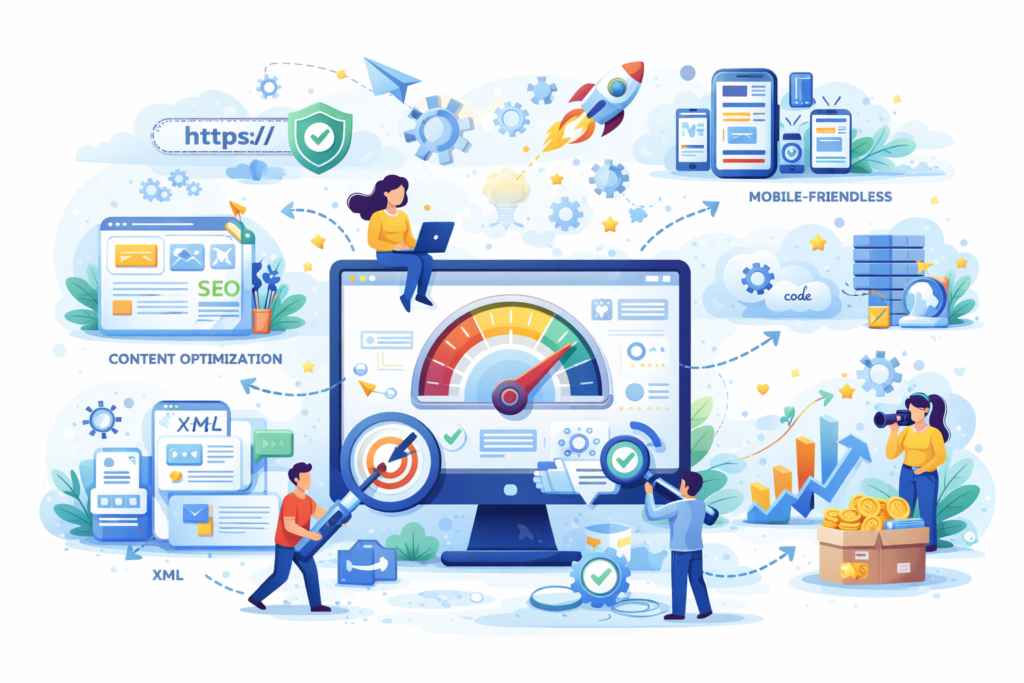
Technical SEO focuses on improving the backend structure of your website to ensure it is easily crawlable and indexable by search engines. This includes optimizing site speed, implementing structured data, and ensuring proper indexing.
A well-optimized website not only improves search rankings but also enhances user experience. Slow-loading pages, broken links, and poor navigation can negatively impact both SEO and conversions. Regular audits and maintenance are essential to identify and fix technical issues.
Furthermore, implementing HTTPS and ensuring website security is crucial. Google considers security a ranking factor, and users are more likely to trust websites that prioritize their safety. By addressing technical aspects, businesses can create a solid foundation for their digital marketing efforts.
Off-Page SEO and Link Building Strategies
Off-page SEO involves activities outside your website that influence your search engine rankings. The most important aspect of off-page SEO is link building, which involves acquiring high-quality backlinks from reputable websites.
Backlinks act as votes of confidence, signaling to search engines that your content is valuable and trustworthy. However, not all links are equal. Quality matters more than quantity. Links from authoritative websites carry more weight and can significantly boost your rankings.
Effective link-building strategies include guest blogging, influencer outreach, and creating shareable content. Building relationships within your industry can also lead to natural link opportunities. Over time, a strong backlink profile can enhance your authority and visibility.
Social Media Marketing and Audience Engagement
Social media platforms have become essential channels for digital marketing. They provide opportunities to connect with audiences, build brand awareness, and drive traffic to your website. Platforms like Facebook, Instagram, LinkedIn, and Twitter each offer unique advantages.
To succeed on social media, businesses must focus on engagement rather than just promotion. This involves creating interactive content, responding to comments, and participating in conversations. Building a community around your brand can lead to increased loyalty and trust.
Additionally, social media analytics provide valuable insights into audience behavior and preferences. By analyzing these metrics, businesses can refine their strategies and improve performance. Consistent and authentic engagement is key to long-term success.
Pay-Per-Click Advertising (PPC) for Instant Results
PPC advertising allows businesses to achieve immediate visibility on search engines and social media platforms. Unlike organic strategies, which take time to show results, PPC campaigns can drive traffic and conversions almost instantly.
Successful PPC campaigns require careful planning and optimization. This includes selecting the right keywords, creating compelling ad copy, and designing effective landing pages. Continuous monitoring and adjustments are essential to maximize ROI.
Moreover, integrating PPC with other digital marketing strategies can enhance overall performance. For example, combining PPC with SEO and content marketing can create a powerful synergy that drives both short-term and long-term results.
Email Marketing: Nurturing Leads and Driving Conversions
Email marketing continues to be one of the highest ROI channels in digital marketing. Despite the rise of social media and instant messaging platforms, email remains a direct and personalized way to communicate with your audience. It allows businesses to nurture leads, build relationships, and guide prospects through the sales funnel.
A successful email marketing strategy starts with building a high-quality email list. This involves offering value-driven incentives such as ebooks, webinars, or exclusive content in exchange for user information. Segmentation is equally important, as it enables marketers to send targeted messages based on user behavior, preferences, and demographics.
Automation tools further enhance the effectiveness of email marketing. From welcome sequences to abandoned cart reminders, automated campaigns ensure timely and relevant communication. By continuously analyzing open rates, click-through rates, and conversions, businesses can refine their strategies and maximize results.
Conversion Rate Optimization (CRO) for Better ROI
Conversion Rate Optimization (CRO) focuses on improving the percentage of website visitors who take a desired action, such as making a purchase or filling out a form. It is a critical component of digital marketing that directly impacts revenue and ROI.
CRO involves analyzing user behavior, identifying bottlenecks, and implementing changes to improve user experience. Techniques such as A/B testing, heatmaps, and user feedback can provide valuable insights into what works and what doesn’t. Even small changes, such as adjusting a call-to-action button or improving page layout, can have a significant impact.
Additionally, trust signals play a crucial role in conversions. Elements like testimonials, reviews, and security badges can reassure users and reduce friction. By focusing on user-centric design and continuous optimization, businesses can achieve higher conversion rates and better overall performance.
Data Analytics and Performance Tracking
Data analytics is the backbone of modern digital marketing. It provides insights into user behavior, campaign performance, and overall effectiveness. Without data, marketers would be making decisions based on assumptions rather than evidence.
Tools like Google Analytics enable businesses to track key metrics such as traffic, bounce rate, and conversions. By analyzing this data, marketers can identify trends, measure success, and uncover opportunities for improvement. Data-driven decision-making is essential for optimizing campaigns and achieving better results.
Moreover, integrating analytics across multiple channels provides a holistic view of the customer journey. This allows businesses to understand how different touchpoints contribute to conversions. With the right insights, marketers can allocate resources more effectively and maximize ROI.
AI and Automation in Digital Marketing
Artificial Intelligence (AI) is transforming the landscape of digital marketing. From predictive analytics to personalized recommendations, AI-powered tools enable businesses to deliver more relevant and engaging experiences. Automation, on the other hand, streamlines repetitive tasks, saving time and improving efficiency.
AI can be used for various applications, including chatbots, content generation, and customer segmentation. These technologies enhance user experience by providing instant responses and tailored content. As a result, businesses can improve engagement and build stronger relationships with their audience.
However, it’s important to strike a balance between automation and human interaction. While AI can handle routine tasks, human creativity and empathy are essential for building genuine connections. By combining both, businesses can achieve optimal results and stay ahead in the competitive digital landscape.
Mobile Marketing and User Experience Optimization
With the majority of internet users accessing content through mobile devices, mobile marketing has become a critical aspect of digital marketing. Ensuring a seamless mobile experience is no longer optional—it’s a necessity.
Responsive design is a key factor in mobile optimization. Websites must adapt to different screen sizes and provide a consistent user experience across devices. According to Google Mobile-First Indexing Guide, Google uses mobile-first indexing, meaning it primarily considers the mobile version of a website for ranking purposes.
Additionally, optimizing page speed and navigation is crucial for mobile users. Slow-loading pages and complex interfaces can lead to high bounce rates and lost opportunities. By prioritizing mobile usability, businesses can enhance user experience, improve rankings, and drive better results.
Future Trends in Digital Marketing
The future of digital marketing is shaped by rapid technological advancements and changing consumer behaviors. Staying ahead of these trends is essential for maintaining a competitive edge. Emerging technologies such as AI, voice search, and augmented reality are redefining how businesses interact with their audiences.
Voice search optimization is becoming increasingly important as more users rely on smart devices for information. This requires a shift towards conversational keywords and natural language processing. Similarly, video content continues to dominate, offering higher engagement and retention rates compared to traditional formats.
Privacy and data protection are also gaining prominence. With stricter regulations and growing user awareness, businesses must prioritize transparency and ethical data practices. By embracing innovation and adapting to changes, marketers can future-proof their strategies and achieve long-term success.
Common Mistakes in Digital Marketing
One of the most common mistakes businesses make is focusing solely on short-term results. While quick wins are important, neglecting long-term strategies such as SEO and content marketing can limit growth. Sustainable success requires a balanced approach that combines immediate and long-term efforts.
Another mistake is ignoring data and analytics. Without proper tracking and analysis, businesses cannot measure performance or identify areas for improvement. Relying on assumptions rather than data can lead to ineffective strategies and wasted resources.
Additionally, many marketers fail to prioritize user experience. Poor website design, slow loading times, and irrelevant content can drive users away. By focusing on delivering value and optimizing the user journey, businesses can avoid these pitfalls and achieve better results.
Best Practices Summary
To succeed in digital marketing, businesses must adopt a holistic and strategic approach. This involves integrating multiple channels, leveraging data, and continuously optimizing performance. Consistency and adaptability are key to staying relevant in a rapidly changing environment.
Focusing on high-quality content and user experience is essential. Content should be informative, engaging, and aligned with user intent. At the same time, websites must be optimized for speed, mobile usability, and accessibility.
Finally, staying updated with industry trends and best practices is crucial. Digital marketing is constantly evolving, and businesses must be willing to adapt and innovate. By following these best practices, marketers can achieve sustainable growth and long-term success.
FAQs
1. What is digital marketing in simple terms?
Digital marketing refers to promoting products or services using online channels such as search engines, social media, email, and websites to reach and engage customers.
2. Why is digital marketing important in 2026?
It enables businesses to reach a global audience, track performance in real time, and adapt strategies based on data-driven insights, making it essential for growth and competitiveness.
3. What are the main types of digital marketing?
The main types include SEO, content marketing, social media marketing, PPC advertising, email marketing, and affiliate marketing.
4. How long does it take to see results?
Results vary depending on the strategy. PPC campaigns can show immediate results, while SEO and content marketing may take several months to deliver significant outcomes.
5. What tools are essential for digital marketing?
Key tools include analytics platforms, keyword research tools, email marketing software, and social media management tools.
6. How can small businesses benefit from digital marketing?
Digital marketing provides cost-effective ways to reach targeted audiences, build brand awareness, and compete with larger businesses.
7. What is the role of AI in digital marketing?
AI helps automate tasks, analyze data, personalize content, and improve customer experiences, making marketing efforts more efficient and effective.
8. How do I measure success in digital marketing?
Success is measured using metrics such as traffic, engagement, conversion rates, and ROI, depending on your specific goals.
Conclusion
Digital marketing is a dynamic and ever-evolving field that offers immense opportunities for businesses to grow and succeed. By understanding its core components, leveraging advanced strategies, and staying aligned with best practices, marketers can achieve remarkable results.
At MyBlogPoster, we believe that success in digital marketing comes from a combination of knowledge, innovation, and execution. By applying the insights and strategies outlined in this guide, you can build a strong online presence, connect with your audience, and drive sustainable growth.
Want to Implement This Easily?
Prompt:
You are an expert consultant. Based on the blog post titled “Digital Marketing”, provide a step-by-step, practical implementation guide. Include tools, best practices, common mistakes to avoid, and advanced tips. Assume the reader wants to implement everything discussed in this article effectively.
Call to Action:
Want our help implementing this? Just reach out to us via our website contact form:
https://www.myblogposter.com/contact-us/