
Learn how Search Engine Optimization (SEO) improves rankings, increases organic traffic, enhances user experience, and drives long-term business growth with proven strategies, technical optimization, content marketing, and Google-approved best practices for 2026.
Introduction
In today’s digital marketplace, Search Engine Optimization (SEO) is no longer optional for businesses that want sustainable online visibility. Whether you operate an eCommerce store, a local service business, a SaaS platform, or a publishing website, your success often depends on how effectively your content appears in search engine results. Businesses that invest in strategic SEO consistently generate more targeted traffic, stronger brand authority, and higher long-term conversions than companies relying only on paid advertising.
At My Blog Poster, we understand that modern SEO is about far more than keywords and backlinks. Search engines now prioritize user experience, topical authority, trust signals, content quality, technical performance, and meaningful engagement. This means websites must provide authentic value while maintaining excellent usability and performance standards.
Modern SEO also aligns closely with Google’s evolving quality standards, including Experience, Expertise, Authoritativeness, and Trustworthiness (E-E-A-T). According to Google Search Central, websites that demonstrate credibility, expertise, and helpful content are more likely to achieve sustainable visibility in organic search results. Businesses that ignore these principles often struggle with declining rankings, poor engagement metrics, and reduced search visibility over time.
This comprehensive guide explains how SEO works in 2026, why it matters for businesses, and how organizations can build long-term search visibility using ethical, effective, and Google-approved optimization strategies.
Understanding Search Engine Optimization in 2026
Search Engine Optimization is the process of improving a website’s visibility in organic search engine results. SEO helps websites rank for relevant search queries, attract targeted users, and convert visitors into customers. Unlike paid advertising, SEO focuses on earning sustainable visibility through quality content, technical optimization, user experience improvements, and authority building.
Modern search engines use advanced artificial intelligence systems to evaluate web pages. Algorithms analyze hundreds of ranking signals, including content relevance, page speed, mobile usability, structured data, authority signals, user engagement, and semantic relationships between topics. This means SEO is no longer about manipulating algorithms but about creating genuinely valuable experiences for users.
Google’s systems now better understand search intent than ever before. A user searching for “best SEO strategies for eCommerce websites” expects detailed guidance, practical solutions, examples, and trustworthy recommendations. Thin or low-value pages are less likely to rank because Google prioritizes content that demonstrates real expertise and usefulness. This aligns with Google’s helpful content system, which emphasizes people-first content creation.
Another major shift in SEO involves semantic search and entity-based indexing. Search engines increasingly understand relationships between topics, brands, products, and user intent. Instead of focusing solely on exact-match keywords, businesses must create comprehensive topical coverage that addresses broader user needs. This includes using related terms, answering frequently asked questions, and providing content depth that supports authority and relevance.
Why SEO Matters for Modern Businesses
SEO provides long-term business value that extends far beyond website traffic. Companies that rank well organically often achieve stronger brand recognition, improved customer trust, and higher conversion rates because users naturally perceive top-ranking websites as more credible and authoritative.
One of SEO’s greatest advantages is sustainable traffic generation. Paid advertising stops generating traffic the moment campaigns end, while optimized content can continue driving organic visitors for months or even years. High-quality SEO content becomes a long-term digital asset that compounds in value over time. Businesses with strong organic visibility frequently reduce customer acquisition costs while increasing profitability.
SEO also improves customer targeting. Organic search users typically have high intent because they actively search for solutions, products, or information. For example, someone searching for “technical SEO services for large websites” is more likely to convert than someone casually viewing social media advertisements. This intent-driven traffic often produces better engagement metrics and stronger conversion outcomes.
Additionally, SEO strengthens brand authority and trust. Appearing prominently in search results reinforces credibility and increases visibility across multiple stages of the customer journey. According to Google Search Essentials, trustworthy websites that provide accurate and valuable information are more likely to achieve sustainable rankings and visibility. Businesses that consistently publish helpful content position themselves as industry leaders while building long-term customer confidence.
The Core Components of Modern SEO
Successful SEO strategies rely on several interconnected components working together. These include technical SEO, on-page SEO, content optimization, user experience improvements, off-page SEO, structured data implementation, and authority building. Ignoring any major component can weaken overall search performance.
Technical SEO ensures search engines can efficiently crawl, index, and understand website content. This includes optimizing site architecture, XML sitemaps, canonical tags, robots.txt files, Core Web Vitals, HTTPS security, and structured data markup. A technically weak website often struggles to rank even if its content quality is strong.
On-page SEO focuses on optimizing individual pages for relevance and usability. This involves title tags, meta descriptions, heading structures, semantic keyword usage, internal linking, image optimization, and content organization. Effective on-page optimization improves both user experience and search engine comprehension.
Off-page SEO centers around building authority and trust through backlinks, brand mentions, partnerships, and digital reputation signals. Search engines interpret authoritative backlinks as endorsements of quality and credibility. However, modern SEO prioritizes natural link acquisition through valuable content and genuine industry relationships rather than manipulative link-building schemes.
User experience optimization has also become central to SEO success. Websites must provide fast loading speeds, mobile responsiveness, intuitive navigation, accessibility, and engaging experiences. Google’s Core Web Vitals documentation emphasizes that performance metrics directly influence user satisfaction and search visibility.
Keyword Research and Search Intent Optimization
Keyword research remains foundational to SEO, but modern optimization requires a deeper understanding of user intent rather than focusing only on search volume. Effective keyword strategies identify what users truly want when they perform specific searches.
There are generally four major search intent categories: informational, navigational, transactional, and commercial investigation. Informational searches seek knowledge, transactional searches indicate purchase intent, navigational searches locate specific websites, and commercial investigation queries compare products or services before decision-making. Businesses that align content with search intent achieve stronger engagement and conversion performance.
Long-tail keywords have become increasingly important because they often reflect more specific user needs. For example, “SEO” is highly competitive and broad, while “local SEO strategies for small law firms” targets a much more focused audience. Long-tail optimization improves relevance while attracting qualified traffic with higher conversion potential.
Semantic keyword optimization also plays a major role in modern rankings. Search engines evaluate related phrases, contextual relevance, and topical depth. Instead of repeating a single keyword unnaturally, effective SEO content naturally incorporates related terms like “organic traffic,” “technical optimization,” “search visibility,” “SERP rankings,” and “content strategy.” This improves readability while helping search engines understand broader topical relevance.
Professional SEO strategies often use tools such as Google Keyword Planner, Google Trends, and Google Search Console to identify opportunities, analyze user behavior, and monitor keyword performance.
Technical SEO Fundamentals
Technical SEO forms the foundation of a high-performing website. Even exceptional content may struggle to rank if search engines encounter crawling, indexing, or usability issues. Technical optimization ensures websites remain accessible, understandable, and performant for both users and search engines.
Website speed is one of the most critical technical ranking factors. Slow-loading websites negatively impact user engagement, bounce rates, and conversions. Google recommends optimizing images, leveraging caching, minimizing render-blocking resources, and improving server response times. The PageSpeed Insights tool helps businesses analyze and improve performance metrics.
Mobile-first indexing is another essential consideration. Since Google primarily uses the mobile version of content for indexing and ranking, websites must provide responsive designs and excellent mobile usability. Poor mobile experiences can significantly reduce rankings and user satisfaction.
Secure browsing also influences SEO performance. HTTPS encryption protects user data and builds trust while meeting modern browser security standards. Google officially confirmed HTTPS as a ranking signal years ago, and secure browsing is now considered a standard expectation for professional websites.
Structured data implementation enhances search visibility by helping search engines interpret page content more effectively. Schema markup can generate rich results such as FAQs, product ratings, reviews, and event listings. Businesses can validate structured data using Google Rich Results Test to ensure proper implementation and maximize SERP visibility.
On-Page SEO Best Practices
On-page SEO focuses on optimizing individual pages to improve rankings, relevance, and user engagement. Effective on-page optimization creates content that is both search-engine friendly and genuinely valuable for readers.
Title tags remain one of the most important on-page SEO elements. Well-optimized titles clearly communicate page topics while naturally incorporating primary keywords. Effective titles also encourage higher click-through rates by appealing to user intent and curiosity.
Meta descriptions, while not direct ranking factors, strongly influence user engagement. A compelling meta description can improve click-through rates by summarizing page value and encouraging users to visit the website. Strong descriptions should remain concise, informative, and aligned with search intent.
Heading structures improve readability and content organization. Proper use of H1, H2, and H3 tags helps search engines understand page hierarchy while making content easier for users to scan. Well-structured articles often achieve better engagement metrics because users can quickly locate relevant information.
Internal linking is another powerful on-page optimization strategy. Linking related pages helps distribute authority across the website while guiding users toward additional valuable content. According to Google documentation on site structure, logical internal linking improves crawling efficiency and content discovery.
Image optimization also contributes to SEO performance. Businesses should compress images, use descriptive filenames, and include accurate alt text for accessibility and relevance. Optimized visuals improve load times while enhancing user experience and search visibility.
Content Marketing and SEO Synergy
Content marketing and SEO are deeply interconnected. High-quality content attracts organic traffic, earns backlinks, builds authority, and supports long-term search visibility. Modern SEO success depends heavily on creating valuable content that solves real user problems.
Search engines increasingly prioritize depth, originality, and usefulness. Thin or repetitive content rarely performs well because algorithms now evaluate topical completeness and informational value. Businesses should focus on creating comprehensive resources that genuinely help readers achieve goals or solve challenges.
Content clusters are particularly effective for building topical authority. This strategy involves creating pillar pages around broad topics supported by interconnected subtopic articles. For example, a pillar page about SEO could link to supporting articles on technical SEO, keyword research, local SEO, and content optimization. This structure helps search engines understand expertise and topic relationships.
Consistency also matters significantly. Websites that regularly publish fresh, high-quality content often experience stronger indexing frequency, improved audience engagement, and greater authority growth. However, quality should always take priority over quantity. Publishing weak or generic articles can harm credibility and reduce overall SEO performance.
Google emphasizes originality and people-first content through its helpful content systems. Businesses should avoid creating articles solely for search engines and instead prioritize genuine educational value. The Helpful Content Guidelines provide valuable insight into creating user-focused content strategies aligned with long-term SEO success.
The Importance of E-E-A-T in SEO
E-E-A-T stands for Experience, Expertise, Authoritativeness, and Trustworthiness. These principles have become increasingly important in Google’s evaluation of website quality, especially for industries involving finance, health, legal advice, and major purchasing decisions.
Experience refers to firsthand knowledge or practical involvement with a topic. Content that demonstrates real-world experience often feels more authentic, credible, and useful. Businesses can strengthen experience signals by sharing case studies, original research, examples, and practical insights.
Expertise focuses on subject-matter knowledge and competence. Search engines want to rank content created by knowledgeable sources rather than generic or inaccurate information. Demonstrating expertise involves accurate explanations, detailed analysis, industry insights, and high-quality supporting evidence.
Authoritativeness reflects reputation and recognition within an industry. Backlinks from trusted websites, positive brand mentions, media coverage, and expert references contribute to authority signals. Strong authority helps search engines determine which websites deserve higher visibility for competitive topics.
Trustworthiness is arguably the most critical E-E-A-T component. Websites should maintain transparent policies, accurate information, secure browsing, clear contact details, and honest business practices. Google’s Search Quality Evaluator Guidelines explain how trust plays a central role in content quality evaluation.
Businesses that consistently demonstrate E-E-A-T principles often achieve stronger rankings, better engagement metrics, and increased customer confidence over time.
Local SEO Strategies for Regional Visibility
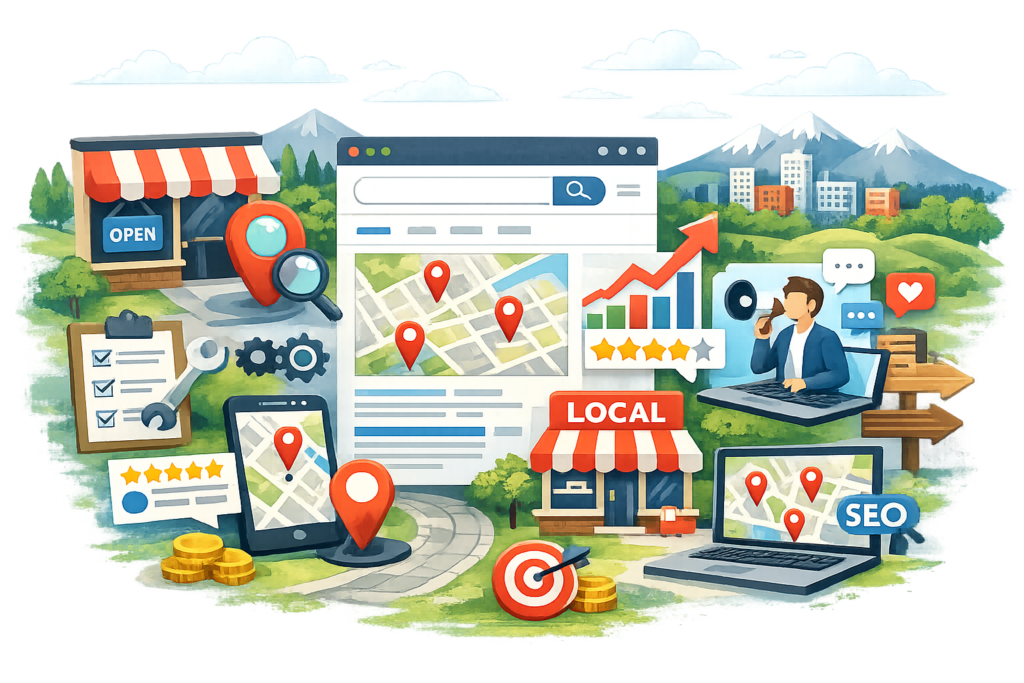
Local SEO helps businesses appear in geographically targeted search results. This is especially important for service-based companies, restaurants, healthcare providers, retail stores, and organizations serving specific regions or cities.
One of the most important local SEO components is optimizing a Google Business Profile. Accurate business information, categories, reviews, photos, and operating hours improve local visibility and user trust. Well-optimized profiles frequently appear in local map packs and location-based searches.
Local keyword targeting also plays a critical role. Businesses should optimize pages for location-specific searches such as “SEO agency in Karachi” or “best local SEO services for dentists.” Location pages, local content, and regional landing pages help search engines understand geographic relevance.
Customer reviews strongly influence local rankings and consumer trust. Positive reviews improve credibility while signaling strong user satisfaction. Businesses should encourage genuine customer feedback and professionally respond to reviews to strengthen engagement and reputation.
Local citations and directory consistency are equally important. Business name, address, and phone number information should remain consistent across all online directories and platforms. Inconsistent information can confuse search engines and weaken local visibility.
Localized content marketing further strengthens regional authority. Publishing community-focused articles, regional guides, local case studies, and area-specific resources helps businesses build stronger geographic relevance while attracting targeted local audiences.
Link Building and Authority Development
Backlinks remain one of the strongest ranking signals in SEO because they act as endorsements of content quality and authority. However, modern link building prioritizes relevance, trustworthiness, and authenticity rather than sheer quantity.
High-quality backlinks typically come from authoritative, relevant websites within similar industries. A single trusted backlink from a respected publication often carries more value than dozens of low-quality links from unrelated sites. Search engines increasingly detect manipulative linking schemes and penalize spammy practices.
Content-driven link acquisition is among the most effective modern strategies. Valuable resources, original research, industry reports, tools, and comprehensive guides naturally attract citations and references from other websites. Businesses that consistently create exceptional content often build backlinks organically over time.
Digital PR also supports authority building. Press coverage, expert interviews, podcast appearances, guest articles, and collaborations increase visibility while generating high-authority references. These activities strengthen both brand reputation and SEO performance.
Internal authority development matters as well. Strong website architecture and strategic internal linking distribute link equity throughout the site while helping search engines understand content relationships. Effective authority-building strategies focus on long-term trust and value rather than shortcuts or manipulative tactics.
User Experience (UX) and SEO Performance
User experience has become one of the most influential components of modern SEO. Search engines increasingly evaluate how users interact with websites, including loading speed, mobile usability, navigation clarity, content readability, and engagement metrics. Websites that create positive user experiences are more likely to retain visitors, encourage interactions, and achieve stronger search rankings.
Core Web Vitals are central to Google’s user experience evaluation system. These metrics measure loading performance, interactivity, and visual stability. A website with slow-loading pages or unstable layouts creates frustration for users and often experiences higher bounce rates. Google recommends optimizing server performance, compressing images, reducing unnecessary scripts, and implementing efficient caching systems to improve Core Web Vitals. Businesses can monitor performance using Google PageSpeed Insights and Google Lighthouse.
Navigation and content structure also play major roles in user satisfaction. Visitors should be able to locate important information quickly without confusion. Clear menus, logical page hierarchies, intuitive layouts, and strong internal linking improve both usability and crawlability. Content should use readable fonts, concise paragraphs, meaningful headings, and appropriate spacing to enhance accessibility and engagement.
Mobile responsiveness is equally critical because the majority of web traffic now originates from mobile devices. Websites must adapt seamlessly to different screen sizes while maintaining functionality and readability. Google’s Mobile-Friendly Test guidelines emphasize the importance of responsive design for modern search visibility. Businesses that neglect mobile optimization risk reduced rankings, weaker engagement, and lower conversion performance.
SEO Analytics and Performance Tracking
SEO without analytics is essentially guesswork. Businesses must consistently monitor rankings, traffic patterns, engagement metrics, technical performance, and conversions to understand which strategies are producing results and where improvements are needed.
One of the most valuable tools for SEO analysis is Google Analytics 4. GA4 provides insight into user behavior, traffic sources, session duration, conversions, and audience engagement. By understanding how users interact with content, businesses can refine optimization strategies and improve website performance.
Google Search Console is another essential platform for SEO monitoring. It allows website owners to track keyword impressions, click-through rates, indexing status, mobile usability, and technical errors. Search Console also provides direct feedback from Google regarding crawl issues, manual actions, and structured data performance.
Rank tracking helps businesses evaluate keyword visibility over time. Monitoring target keywords reveals which pages are improving, which competitors are gaining visibility, and where optimization opportunities exist. However, rankings alone should not be the sole success metric. Organic traffic quality, conversions, engagement, and revenue impact provide a more complete view of SEO effectiveness.
Behavior metrics such as bounce rate, average engagement time, pages per session, and conversion paths help identify user experience strengths and weaknesses. Pages with high traffic but poor engagement may require content improvements, clearer calls to action, or better alignment with search intent. Data-driven SEO strategies consistently outperform assumptions because they allow businesses to adapt based on real user behavior and measurable outcomes.
Common SEO Mistakes Businesses Should Avoid
Many businesses invest in SEO but fail to achieve meaningful results because they rely on outdated tactics, ignore technical issues, or prioritize shortcuts over quality. Understanding common SEO mistakes can help organizations avoid costly setbacks and long-term ranking problems.
One of the most damaging mistakes is keyword stuffing. Repeating keywords unnaturally throughout content creates poor readability and may trigger spam signals. Modern search engines understand context and semantics, making excessive keyword repetition unnecessary and potentially harmful. Effective SEO uses keywords naturally within valuable, user-focused content.
Another frequent issue involves publishing thin or low-quality content. Websites that create shallow articles solely to target keywords often struggle to build authority or engagement. Search engines increasingly prioritize depth, originality, and usefulness. Businesses should focus on creating comprehensive resources that genuinely help users rather than producing large quantities of weak content.
Ignoring technical SEO can also significantly limit performance. Broken links, crawl errors, duplicate content, slow-loading pages, poor mobile usability, and missing structured data all weaken search visibility. Regular technical audits help identify and resolve issues before they negatively affect rankings.
Many companies also make the mistake of pursuing low-quality backlinks through link farms or manipulative schemes. Google’s Spam Policies documentation clearly warns against artificial link-building practices. Sustainable SEO relies on authentic authority-building through valuable content, industry relationships, and trustworthy digital reputation signals.
Finally, businesses often overlook user intent. Ranking for irrelevant keywords may generate traffic, but if visitors do not find the information they need, engagement and conversions suffer. Successful SEO aligns content closely with user expectations, needs, and search behavior.
The Future of SEO and AI-Driven Search
SEO continues to evolve rapidly as artificial intelligence transforms how search engines understand and rank content. Businesses must adapt to these changes by prioritizing quality, expertise, and user value rather than relying on outdated optimization tactics.
AI-powered search systems now interpret context, relationships, and intent with remarkable sophistication. Google’s algorithms increasingly analyze meaning rather than focusing solely on exact-match keywords. This means content creators must prioritize comprehensive topical coverage, semantic relevance, and authentic expertise.
Voice search and conversational queries are also becoming more important. Users increasingly search using natural language questions such as “What is the best SEO strategy for local businesses?” rather than fragmented keyword phrases. Businesses should optimize for conversational search patterns by creating FAQ content, featured-snippet-friendly answers, and natural language structures.
Visual search and multimodal search experiences are expanding as well. Search engines can now analyze images, videos, and combined text-image queries more effectively. Optimized multimedia content, descriptive alt text, structured data, and high-quality visuals contribute to stronger visibility across evolving search formats.
AI-generated content has introduced new opportunities and challenges. While AI tools can support research and content creation, search engines still prioritize originality, expertise, and human value. According to Google guidance on AI-generated content, the quality and usefulness of content matter more than how it was produced. Businesses should ensure all published content demonstrates accuracy, authenticity, and meaningful insights rather than relying on generic automation.
Building a Sustainable Long-Term SEO Strategy

Effective SEO is not a one-time project but an ongoing process of optimization, analysis, and improvement. Sustainable SEO strategies focus on long-term value creation rather than short-term ranking manipulation.
A successful long-term SEO approach begins with strong technical foundations. Websites should maintain fast performance, secure browsing, clean architecture, mobile responsiveness, and crawlable structures. Technical reliability creates the infrastructure necessary for content and authority strategies to succeed.
Content planning should align with business goals, audience needs, and search intent. Businesses benefit from creating editorial calendars, topical clusters, evergreen resources, and regularly updated articles. Evergreen content continues generating value over time, while timely updates ensure information remains accurate and relevant.
Authority development requires patience and consistency. Brands that publish exceptional content, engage with audiences, participate in industry discussions, and build authentic relationships naturally strengthen their digital reputation. Sustainable link acquisition and brand mentions gradually improve visibility and trust.
Continuous analysis and adaptation are equally important. SEO algorithms, user behavior, and competitive landscapes constantly evolve. Businesses should regularly audit performance, review analytics, test optimization strategies, and refine approaches based on measurable data. Companies that remain adaptable are better positioned to maintain long-term search visibility and competitive advantage.
Best Practices Summary
Successful SEO strategies in 2026 require a balance of technical excellence, content quality, user experience optimization, and authority building. Businesses that prioritize long-term value and ethical optimization consistently outperform those relying on shortcuts or manipulative tactics.
Here are the most important SEO best practices to follow:
- Create original, high-quality, people-first content
- Optimize websites for mobile responsiveness and fast loading speed
- Use clear heading structures and semantic keyword optimization
- Focus on search intent rather than keyword density
- Implement structured data and technical SEO best practices
- Build authoritative, trustworthy backlinks naturally
- Improve user experience through intuitive design and accessibility
- Monitor analytics and performance metrics consistently
- Maintain secure HTTPS browsing and transparent policies
- Follow Google’s E-E-A-T principles for credibility and trust
Businesses that apply these strategies consistently are more likely to achieve sustainable rankings, stronger brand authority, higher engagement, and improved long-term profitability.
Frequently Asked Questions
What is Search Engine Optimization (SEO)?
Search Engine Optimization is the process of improving a website’s visibility in organic search engine results. SEO involves technical optimization, content creation, keyword targeting, user experience improvements, and authority building to increase search rankings and attract targeted traffic.
Why is SEO important for businesses?
SEO helps businesses generate sustainable organic traffic, improve brand visibility, increase customer trust, and reduce long-term marketing costs. Organic search traffic often delivers higher-quality leads because users actively search for specific solutions or information.
How long does SEO take to produce results?
SEO is a long-term strategy. While some improvements may appear within weeks, meaningful ranking growth often takes several months depending on competition, website authority, technical condition, and content quality. Sustainable SEO requires consistency and ongoing optimization.
What is the difference between on-page SEO and technical SEO?
On-page SEO focuses on content optimization, keywords, headings, internal linking, and page relevance. Technical SEO focuses on crawlability, indexing, website speed, mobile responsiveness, structured data, and technical infrastructure.
Are backlinks still important in 2026?
Yes, backlinks remain a major ranking factor because they signal authority and trustworthiness. However, modern SEO prioritizes high-quality, relevant backlinks rather than large quantities of low-value links.
How does mobile optimization affect SEO?
Google uses mobile-first indexing, meaning the mobile version of content is prioritized for ranking and indexing. Poor mobile usability can negatively impact rankings, engagement, and conversions.
What are Core Web Vitals?
Core Web Vitals are performance metrics that measure loading speed, interactivity, and visual stability. These metrics help evaluate user experience quality and influence search visibility.
Can AI-generated content rank in search engines?
AI-assisted content can rank if it is original, accurate, valuable, and aligned with user intent. Google prioritizes content quality and usefulness rather than the specific method used to create content.
Conclusion
Search Engine Optimization continues to be one of the most powerful digital marketing strategies for sustainable online growth. Businesses that invest in technical optimization, high-quality content, authority development, and user experience improvements consistently achieve stronger visibility, greater trust, and long-term competitive advantages.
At My Blog Poster, we believe modern SEO success comes from combining strategic expertise with authentic value creation. Search engines increasingly reward websites that prioritize user needs, demonstrate expertise, and maintain trustworthy digital experiences. Companies that adopt these principles position themselves for lasting success in an increasingly competitive digital landscape.
As search technology continues evolving through artificial intelligence, semantic understanding, and user-focused ranking systems, businesses must remain adaptable and committed to quality. Ethical, people-first SEO is not only more sustainable but also more effective for building meaningful customer relationships and long-term brand authority.
Want to Implement This Easily?
Prompt Text:
You are an expert consultant. Based on the blog post titled “Search Engine Optimization”, provide a step-by-step, practical implementation guide. Include tools, best practices, common mistakes to avoid, and advanced tips. Assume the reader wants to implement everything discussed in this article effectively.
Call to Action:
Want our help implementing this? Just reach out to us via our website contact form:
Contact Us