
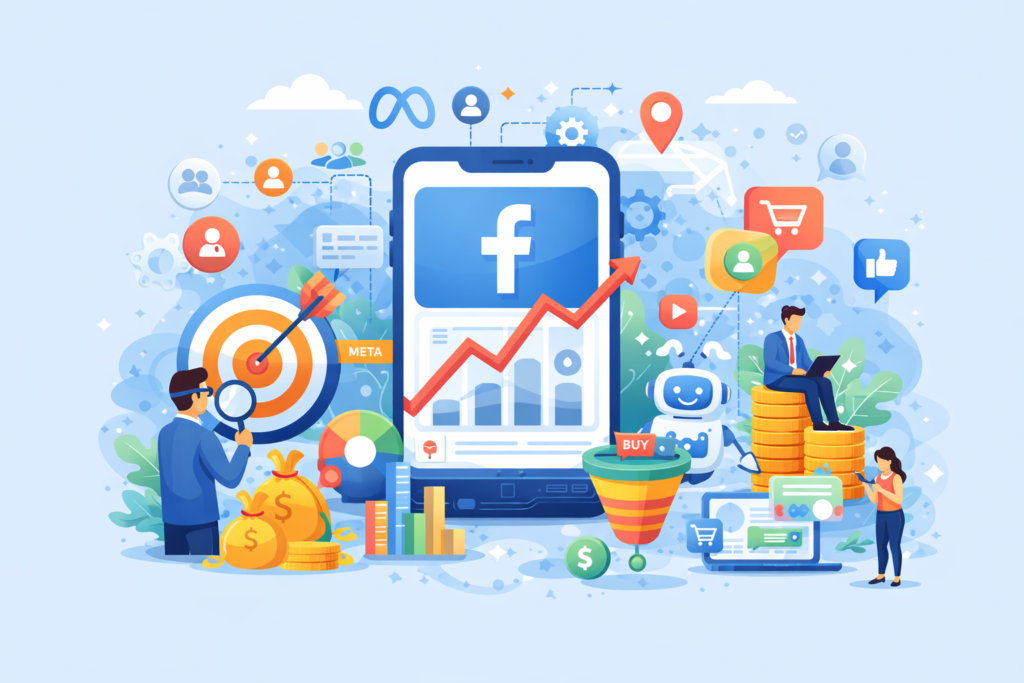
Learn how to create, optimize, and scale high-converting Facebook Ads campaigns using advanced targeting, creative strategy, and data-driven optimization techniques.
Introduction
In today’s competitive digital landscape, Facebook Ads remain one of the most powerful tools for driving targeted traffic, generating leads, and scaling revenue. With billions of active users across Facebook and Instagram, businesses have access to an unparalleled audience—if they know how to reach it effectively.
At MyBlogPoster, we believe that successful advertising is not just about spending money—it’s about precision, strategy, and continuous optimization. This guide is designed to help you understand Facebook Ads at a deeper level, going far beyond basic tutorials.
This long-form guide is crafted with Google’s E-E-A-T principles in mind, ensuring it delivers real-world experience, expert-level knowledge, and trustworthy insights. Whether you’re a beginner or an advanced marketer, this resource will help you build campaigns that actually convert.
Understanding the Facebook Ads Ecosystem
Facebook Ads are not just about boosting posts—they are part of a sophisticated advertising ecosystem that includes multiple platforms such as Facebook, Instagram, Messenger, and Audience Network. Together, these platforms allow advertisers to reach users across different touchpoints in their digital journey.
The Facebook Ads ecosystem operates through a structured hierarchy: Campaign → Ad Set → Ad. At the campaign level, you define your primary objective such as traffic, conversions, or lead generation. At the ad set level, you control targeting, placements, and budgets. Finally, at the ad level, you design the creative elements such as images, videos, and copy.
Understanding this structure is critical because it directly impacts campaign performance. Poor structuring often leads to wasted ad spend and inefficient targeting. For example, combining too many audiences in one ad set can confuse the algorithm and reduce performance. A well-structured campaign, on the other hand, enables better optimization and clearer data insights.
Additionally, Facebook uses machine learning to optimize ad delivery. This means your campaigns improve over time as the system gathers more data. However, this also means that consistent strategy and patience are required—frequent changes can reset the learning phase and hurt performance.
To align with platform best practices, refer to Facebook’s official documentation: Facebook Business Help Center
How Facebook Ads Work: Algorithm & Auction System
Facebook Ads operate on an advanced auction system that determines which ads are shown to users. Unlike traditional auctions, it’s not just about the highest bidder—it’s about delivering the most relevant and valuable experience to users.
The system evaluates three key factors: bid amount, estimated action rates, and ad quality/relevance. This means even a smaller advertiser can outperform larger competitors by creating highly engaging and relevant ads. The algorithm predicts how likely a user is to interact with your ad and assigns it a value score.
The concept of relevance is central to Facebook Ads success. Ads that receive higher engagement (likes, shares, comments, clicks) are rewarded with lower costs and better placements. Conversely, low-quality ads are penalized with higher costs and reduced visibility.
Facebook also uses a learning phase, during which it tests different audience segments and placements to optimize performance. During this phase, performance may fluctuate, but once enough data is collected, the system stabilizes and improves results.
For deeper insight into how ad auctions and delivery systems work, review this resource: Facebook Ad Auction & Delivery System
Understanding this system allows advertisers to focus on value-driven advertising, rather than simply increasing budgets.
Setting Clear Goals for Facebook Ad Campaigns
Before launching any Facebook Ads campaign, defining clear and measurable goals is essential. Without a defined objective, it becomes impossible to evaluate success or optimize effectively. Facebook provides multiple campaign objectives, each aligned with specific business goals.
Common objectives include brand awareness, traffic, engagement, lead generation, app installs, and conversions. Choosing the right objective ensures that Facebook optimizes your campaign for the desired outcome. For example, selecting “traffic” instead of “conversions” may result in clicks that don’t convert into sales.
Goal setting should follow the SMART framework—Specific, Measurable, Achievable, Relevant, and Time-bound. For instance, instead of saying “increase sales,” a better goal would be “generate 100 qualified leads within 30 days at a cost per lead under $10.”
Additionally, aligning your ad goals with your overall marketing funnel is crucial. Top-of-funnel campaigns focus on awareness, mid-funnel campaigns nurture interest, and bottom-of-funnel campaigns drive conversions. Each stage requires different messaging, creatives, and targeting strategies.
To ensure accurate measurement, integrate tracking tools such as Facebook Pixel and follow analytics best practices:
Meta Pixel
Clear goal-setting lays the foundation for every successful Facebook Ads strategy.
Audience Targeting: Reaching the Right People
Audience targeting is one of the most powerful features of Facebook Ads. The platform allows advertisers to reach highly specific audiences based on demographics, interests, behaviors, and custom data.
There are three main types of audiences: Core Audiences, Custom Audiences, and Lookalike Audiences. Core audiences are built using demographic and interest-based targeting. Custom audiences allow you to target users who have already interacted with your business, such as website visitors or email subscribers. Lookalike audiences help you reach new users who share similar characteristics with your existing customers.
Effective targeting requires a deep understanding of your ideal customer. This includes their age, location, interests, online behavior, and purchasing habits. Creating detailed buyer personas can significantly improve targeting accuracy and campaign performance.
It’s also important to avoid over-targeting. Narrowing your audience too much can limit reach and increase costs. Instead, allow Facebook’s algorithm some flexibility to optimize delivery. Testing different audience segments and analyzing performance data is key to finding the right balance.
For privacy-compliant targeting practices, refer to: Facebook Targeting & Privacy Guidelines
Crafting High-Converting Ad Creatives

Ad creatives are the most visible part of your Facebook Ads campaign, and they play a crucial role in capturing attention and driving engagement. A compelling creative can significantly improve click-through rates and conversions.
Effective creatives combine visual appeal, clear messaging, and strong emotional triggers. High-quality images or videos should be paired with concise and persuasive copy that highlights the value proposition. Headlines should grab attention, while descriptions should reinforce the message and encourage action.
Video content is particularly effective, as it allows you to tell a story and engage users more deeply. Short, engaging videos with captions often perform better, especially on mobile devices where users may watch without sound.
Another important aspect is consistency between your ad and landing page. If users click on an ad expecting a specific offer but land on a mismatched page, they are likely to leave, resulting in wasted ad spend.
Testing multiple variations of creatives—known as A/B testing—is essential. This allows you to identify which elements resonate most with your audience and continuously improve performance.
For creative best practices aligned with platform standards: Facebook Ad Creative Best Practices
Writing Persuasive Ad Copy That Converts
Ad copy is where you communicate your message and persuade users to take action. While visuals attract attention, it is the copy that drives conversions. Writing effective ad copy requires a deep understanding of your audience’s needs, pain points, and desires.
A strong ad copy follows a proven structure: hook → problem → solution → call-to-action. The hook grabs attention, the problem resonates with the audience, the solution presents your offer, and the call-to-action directs the user on what to do next.
Using emotional triggers such as urgency, scarcity, and social proof can significantly increase conversions. For example, phrases like “limited time offer” or “join thousands of satisfied customers” create a sense of urgency and credibility.
Clarity is more important than creativity. Avoid jargon or overly complex language—your message should be easy to understand at a glance. Remember, users scroll quickly, so your ad must communicate value within seconds.
Testing different copy variations is essential for optimization. Even small changes in wording can lead to significant differences in performance. Continuous experimentation helps refine your messaging and improve results over time.
Choosing the Right Ad Formats and Placements
Facebook offers a wide range of ad formats and placements, allowing advertisers to tailor their campaigns to different objectives and audiences. Choosing the right combination can significantly impact performance.
Common ad formats include image ads, video ads, carousel ads, slideshow ads, and collection ads. Each format serves a different purpose. For example, carousel ads are ideal for showcasing multiple products, while video ads are effective for storytelling and brand awareness.
Placements determine where your ads appear, such as Facebook News Feed, Instagram Feed, Stories, Messenger, and Audience Network. Automatic placements are recommended for most campaigns, as they allow Facebook to optimize delivery across platforms.
However, in some cases, manual placements may be beneficial. For instance, if your target audience is highly active on Instagram, focusing on Instagram placements can improve engagement and results.
Understanding user behavior on different platforms is key. What works on Facebook may not work on Instagram or Messenger. Tailoring your creatives and messaging to each placement ensures a better user experience and higher performance.
For placement optimization guidelines: Facebook Ad Placements Guide
Budgeting and Bidding Strategies for Maximum ROI
Budgeting is one of the most critical aspects of Facebook Ads success. Without a well-planned budget strategy, even the best campaigns can fail to deliver results. Facebook offers two main budgeting options: daily budgets and lifetime budgets. Daily budgets provide consistent spending, while lifetime budgets allow Facebook to optimize spend over a defined period.
Bidding strategies determine how much you are willing to pay for desired actions such as clicks or conversions. Facebook provides automated bidding options that use machine learning to optimize performance. While manual bidding offers more control, it requires deep expertise and constant monitoring. For most advertisers, automated bidding delivers better results due to its ability to adapt in real-time.
A key principle in budgeting is to start small and scale gradually. Launch campaigns with a test budget, analyze performance data, and then increase spending on high-performing ad sets. This minimizes risk and ensures efficient allocation of resources.
It’s also important to monitor cost per result metrics such as cost per click (CPC), cost per acquisition (CPA), and return on ad spend (ROAS). These metrics provide valuable insights into campaign efficiency and profitability.
For guidance on ad budgeting and bidding best practices, refer to: Facebook Budgeting & Bidding Guide
Conversion Tracking and Facebook Pixel Setup
Accurate tracking is essential for measuring the success of your Facebook Ads campaigns. Without proper tracking, it is impossible to understand which ads are driving results and which are not. The Facebook Pixel is a powerful tool that allows you to track user behavior on your website.
The Pixel works by placing a small piece of code on your website, which collects data on user actions such as page views, purchases, and form submissions. This data enables you to measure conversions, optimize campaigns, and build custom audiences for retargeting.
Setting up the Pixel correctly is crucial. You must ensure that all relevant events are tracked and that the data is accurately reported. Testing the Pixel implementation helps identify and fix any issues before launching campaigns.
In addition to basic tracking, advanced features such as event tracking and conversion API can provide deeper insights and improve data accuracy. These tools help overcome challenges such as browser restrictions and data privacy regulations.
To ensure compliance with best practices and accurate implementation: Meta Pixel
A/B Testing and Data-Driven Optimization
A/B testing, also known as split testing, is a fundamental practice in Facebook Ads optimization. It involves testing different variations of ads to determine which performs best. This data-driven approach eliminates guesswork and helps you make informed decisions.
You can test various elements such as headlines, images, videos, ad copy, audience segments, and call-to-action buttons. The key is to test one variable at a time to isolate its impact on performance. Running multiple tests simultaneously without proper structure can lead to inaccurate conclusions.
Analyzing test results is just as important as running the tests. Focus on key performance indicators such as click-through rate (CTR), conversion rate, and cost per result. Identify patterns and use insights to refine your campaigns.
Continuous testing and optimization are essential for long-term success. Market trends, audience behavior, and platform algorithms change over time, so what works today may not work tomorrow. Regular testing ensures that your campaigns remain effective and competitive.
For structured experimentation guidelines: Facebook A/B Testing
Retargeting Strategies That Drive Conversions
Retargeting is one of the most powerful strategies in Facebook Ads. It allows you to re-engage users who have already interacted with your brand but have not yet converted. These users are more likely to take action, making retargeting campaigns highly effective.
There are several types of retargeting audiences, including website visitors, video viewers, and engagement audiences. For example, you can target users who visited a product page but did not complete a purchase. By showing them relevant ads, you can encourage them to return and convert.
Personalization is key to successful retargeting. Tailor your messaging based on user behavior. For instance, if a user abandoned a cart, show them the exact product they viewed along with a limited-time discount. This creates a sense of urgency and relevance.
Frequency management is also important. Showing the same ad too many times can lead to ad fatigue and negative user experience. Rotating creatives and setting frequency caps helps maintain engagement and effectiveness.
Retargeting, when done correctly, can significantly improve conversion rates and maximize return on ad spend.
Scaling Facebook Ads Campaigns Effectively
Scaling is the process of increasing your ad spend while maintaining or improving performance. It is a crucial step for businesses looking to grow and maximize revenue from Facebook Ads.
There are two main scaling methods: vertical scaling and horizontal scaling. Vertical scaling involves increasing the budget of existing high-performing campaigns. Horizontal scaling involves creating new ad sets targeting different audiences or using different creatives.
Gradual scaling is essential to avoid disrupting the algorithm. Increasing budgets too quickly can reset the learning phase and negatively impact performance. A common approach is to increase budgets by 10–20% every few days while monitoring results.
Expanding audience reach through lookalike audiences and testing new markets can also drive growth. However, it’s important to maintain a balance between scaling and performance optimization.
Successful scaling requires a strong foundation—well-tested creatives, optimized targeting, and reliable tracking. Without these elements, scaling can lead to increased costs and reduced efficiency.
Advanced Facebook Ads Strategies for 2026
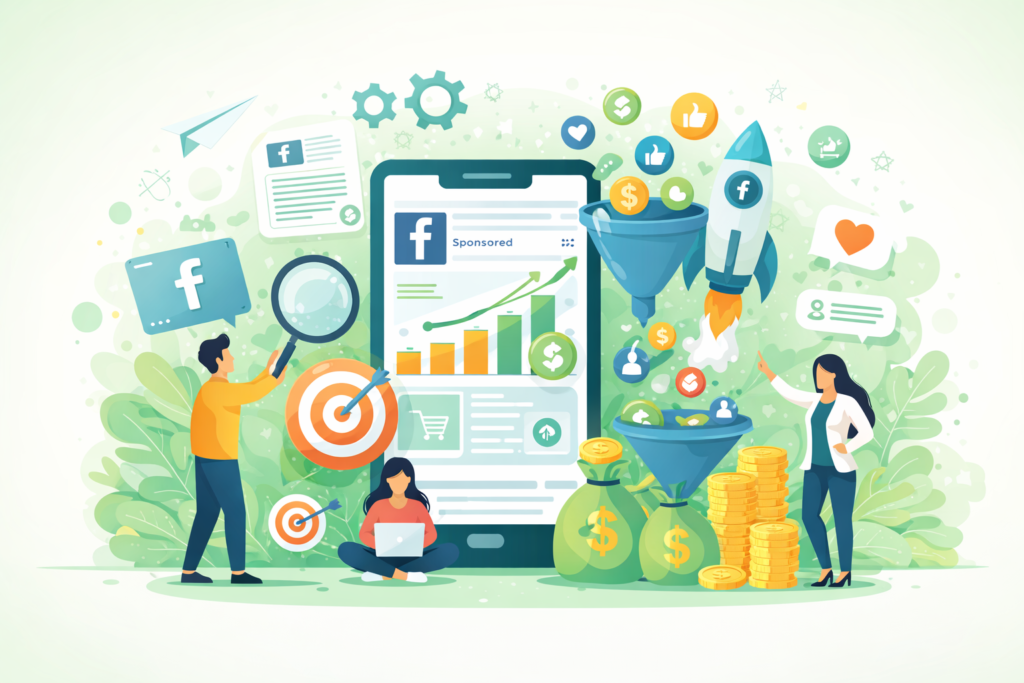
As digital advertising evolves, staying ahead of trends is essential for maintaining a competitive edge. Advanced Facebook Ads strategies focus on leveraging automation, data, and emerging technologies.
One key trend is the use of AI-driven optimization. Facebook’s algorithm is becoming increasingly sophisticated, allowing advertisers to rely more on automated targeting and bidding. Embracing automation can improve efficiency and performance.
Another important strategy is creative diversification. Instead of relying on a single ad, create multiple variations to test different messaging and visuals. This not only improves performance but also reduces the risk of ad fatigue.
Privacy changes and data restrictions are also shaping the future of advertising. Implementing solutions such as conversion API and first-party data strategies is crucial for maintaining accurate tracking and targeting.
Staying updated with platform changes and continuously adapting your strategy ensures long-term success in Facebook advertising.
Common Mistakes to Avoid in Facebook Ads
Even experienced marketers make mistakes that can negatively impact campaign performance. Understanding and avoiding these common pitfalls can save time and money.
One of the most common mistakes is poor targeting. Targeting the wrong audience leads to low engagement and wasted ad spend. It’s important to continuously refine your audience based on performance data.
Another mistake is ignoring data and analytics. Many advertisers focus on launching campaigns but fail to analyze results. Without data-driven insights, it is impossible to optimize and improve performance.
Overcomplicating campaigns is also a frequent issue. Too many ad sets, audiences, and variables can make it difficult to manage and analyze performance. Simplicity and structure are key to effective campaign management.
Finally, neglecting creative quality can significantly impact results. Low-quality visuals and weak messaging fail to capture attention and drive engagement. Investing in high-quality creatives is essential for success.
Best Practices Summary for Long-Term Success
Achieving long-term success with Facebook Ads requires a combination of strategy, creativity, and continuous optimization. Following best practices ensures consistent performance and sustainable growth.
First, always start with clear goals and align your campaigns with your marketing funnel. This provides direction and helps measure success effectively. Second, focus on audience understanding and targeting precision. Knowing your audience is the foundation of successful advertising.
Third, prioritize creative quality and messaging. High-quality visuals and persuasive copy are essential for capturing attention and driving conversions. Fourth, leverage data and analytics to make informed decisions. Continuous testing and optimization are key to improving performance.
Finally, stay updated with platform changes and industry trends. Digital advertising is constantly evolving, and adapting to new developments is crucial for maintaining a competitive edge.
By following these best practices, you can build a strong and effective Facebook Ads strategy that delivers consistent results.
Frequently Asked Questions
1. How much should I spend on Facebook Ads as a beginner?
Start with a small daily budget (e.g., $5–$20) and scale based on performance. Focus on testing before increasing spend.
2. How long does it take for Facebook Ads to work?
Typically, campaigns need 3–7 days to exit the learning phase and start delivering stable results.
3. What is the best objective for conversions?
The “Conversions” objective is ideal for driving sales or leads, as it optimizes for specific actions.
4. Why are my Facebook Ads not converting?
Common reasons include poor targeting, weak creatives, slow landing pages, or incorrect tracking setup.
5. Are video ads better than image ads?
Video ads often perform better for engagement, but the best format depends on your audience and campaign goals.
6. How often should I update my ads?
Refresh creatives every 2–4 weeks to avoid ad fatigue and maintain performance.
7. What is a good CTR for Facebook Ads?
A CTR above 1% is generally considered good, but this varies by industry.
8. Can I run Facebook Ads without a website?
Yes, you can use lead generation ads or send traffic to a Facebook page or Messenger.
Conclusion
Facebook Ads offer unmatched opportunities for businesses to reach targeted audiences and drive measurable results. However, success requires more than just launching campaigns—it requires a strategic, data-driven approach.
At MyBlogPoster, we emphasize the importance of combining expert knowledge, real-world experience, and continuous optimization. By following the strategies outlined in this guide, you can create high-performing campaigns that deliver consistent growth and profitability.
Want to Implement This Easily?
Prompt:
You are an expert consultant. Based on the blog post titled “(Facebook Ads)”, provide a step-by-step, practical implementation guide. Include tools, best practices, common mistakes to avoid, and advanced tips. Assume the reader wants to implement everything discussed in this article effectively.
Call to Action:
Want our help implementing this? Just reach out to us via our website contact form: https://www.myblogposter.com/contact-us/